It really doesn't matter who you choose. The ones that love you, we want nothing more than your complete happiness. That's all. We want you to make choices to be happy, not these unnecessary compromises that undermine yourself.
Love shows itself in one's actions not words. You devalue yourself by taking someone's words at face value, allow them to cannibalize you with their selfishness and the greed, take what they can for their own happiness.
Whatever happens, he will never be able to deserve you--he doesn't have the capacity. Can you accept that?
Lucky girl, recognize that you are and have always been a lucky girl.
Because you're young and beautiful in the big city.
Wednesday, December 12, 2007
voices
Monday, December 10, 2007
ass
From all appearances, he looked like a perfectly respectable business man: gray flannel suit, computer bag, Wall Street Journal, raincoat, etc. Except for the fact that he grabbed my ass. This morning. At Penn Station. A violation in full public view.
It isn't that I have a particularly nice ass. I'm easy prey. And he knew he could get away with menacing upon my intimate space.
I'm beginning to think that this is really how most of them regard me--DH, MP, SPK, WLF--with their deference and easy sugar-coated everythings. It is easy to see how starved I am for attention, that it would take little more than a bit of flattery to perpetrate that fraud. The fraud that I have any other purpose for them other than just a quick piece ass every now and again.
It isn't that I have a particularly nice ass. I'm easy prey. And he knew he could get away with menacing upon my intimate space.
I'm beginning to think that this is really how most of them regard me--DH, MP, SPK, WLF--with their deference and easy sugar-coated everythings. It is easy to see how starved I am for attention, that it would take little more than a bit of flattery to perpetrate that fraud. The fraud that I have any other purpose for them other than just a quick piece ass every now and again.
Wednesday, October 31, 2007
out out
While flossing this morning, I discovered a black spot no more than a millimeter in diameter adjacent to my left molar. Upon closer examination, it appeared to be a pair of contiguous dots, as if someone took a thin black Sharpie and left two impressions on the inside of my cheek. I scratched it, attempting to dislodge any foreign pieces adhering to the skin's surface. But it was inside the skin.
I’m scared. Out of my wits.
People don't usually get moles inside their mouth. What I have may be the symptom of mucosal melanoma, a type of oral cancer. The survival rates are estimated at 19-percent, most do not live more than five years, and the treatments (radiation, surgery, etc.) are often disfiguring. The prospect of disfigurement really ups the ante, especially for the super-vain such as myself. This terror is exacerbated by those stomach-churning online images showing the advanced stages of this disease, lesions ravaging the mouth and face.
I don’t want to have this. And, the stats work in my favor: melanoma of the mouth is rare in general, and even less common in well-nourished women under 40. More likely, it is an amalgam tattoo, an innocuous stain that occurs as a result of dental work—and I have undergone extensive root-canal crowning in that very area during the previous six months.
Still, the stats don’t rule out the possibility. I’ve always maintained a doctrine of Chiik Exceptionalism, often using it as an excuse to exempt myself of rules and responsibilities of the common folk. By the same rationale, I may be one of the unfortunate outliers during those few instances where one would do well to be in the middle of the medical norm curve. I think about the excess boozing from the previous night. And I think about the pack of Parliaments in my handbag, reserves for when I get the occasional urge. And what may at the outset pose an inconsequential risk, a combination of the two vices increases the danger 38-fold—it may just be enough to turn the inconsequential consequential.
Hypochondriacs develop real illnesses, too. I’ve endured countless sleepless nights and imposed upon good friends over scenarios of Japanese encephalitis, Creutzfeldt-Jakob disease, flesh-eating bacteria, and all sexually transmitted viruses that begin with the letter “H.” Finally, there is the big “C”—Cancer. Of the stomach. Colon. Cervix. Breast. Esophagus. Lymph nodes. Brain. Skin. Fear: it is like cancer, metastasizing uncontrolled throughout vital areas of the mind and body. I want neither these diseases nor the fear, but I want someone to assure me with absolute certainty that I am free from it.
I don’t want to die.
I encountered my initial crisis at the age of ten in the darkened dome of Hayden Planetarium. This was on a play date with Sonja Yovik. I stared at the display of lights—stars, planets, galaxies—marveling over celestial time, the beginning which has no beginning and the end which has no end. I thought about the blackness that extends infinitely at either end of my life. A blip. And then nonexistence for eternity.
Sonja and Mr. Yovik were concerned but did not understand. I could not fully express my terror then. It seems ludicrous that a child of ten should fret about dying. But really, when is an appropriate time? I fell into despondency for many months following. At night, I would curl up in mama’s bed or in a sleeping bag on my sister’s rug, eyes opened in the dark room, unable to sleep, until early morning exhaustion would mercifully overtake me. Mama’s words provided little comfort—death was nothing to fear, a natural and, perhaps, even welcome process that will happen a long ways away. She was probably the smartest person I knew but how could she possible know it with certainty? My sister said it was painless, like sleeping. Forever. Leeza and Vanessa, my best friends, told me to cut it out because I was getting all creepy with this death stuff.
And so, I managed to shove my anxieties into a trunk and left it in the attic. But like Rochester’s syphilitic first wife, the anxieties still reappear at inopportune moments, my brain relapses back into incurable madness. The moment could be small—deathbed scenes in even the silliest movies could induce a break of cold sweat and loss of bladder control. This is doubly so when I'm confronted with topics of astrophysics, geological time, climatology, or full-scale extinction. And of course, when it comes to issues relating to disease, magnify that ten-fold.
It was this very issue that catalyzed the second major crisis during my early 20s. After living together for a little over a year, Omar decided to tell me he had every STD he could think of: herpes, hepatitis, HIV, HPV, syphilis, etc. Without any grounds for suspicion, he did this out of fear that I was cheating on him—in effect, using this ploy as a psychological chastity belt. Is there anything that cools the ardor more than incurable life-threatening STDs?
Even at the outset, I scarcely believed his claims. The man wouldn’t know sarcoma from a sebaceous cyst, let alone get his medical facts straight. Even so, there is no certainty. Once the idea is introduced, the only thing that you can do is try to rule it out. The early onset of many of these diseases are general (flu-like symptoms, diarrhea, skin abnormalities, disruption of the vaginal flora) and it takes time to test with any acceptable level of certainty. For some people it could take anywhere from 4-to-12 weeks to develop antibodies to the viruses. What this added up to was three months of psychological torture, of checking the CDC and of reprocessing every statistical probability. But the most unspeakable part of this was that inescapable feeling of ruin. I was ruined. I allowed this man to rob me of all that my family and friends bestowed upon me—life and love.
It took me more than five years to get my life back. And yet, one never fully recovers because those neural pathways have already been set, extensively trod, and deeply grooved. Just a little bit could fire off the anxiety circuitry, to throw me back into frantic grappling with all the epidemiological what-ifs. And all the infinite variants. Innocuous symptoms later resurface as something sinister. Is it esophageal cancer or a sore throat? Is it Kaposi sarcoma or eczema? Is it ocular herpes or did I leave my contacts in too long? Is it colon cancer or did I eat some bad curry tonkatsu? It is cervical cancer or bacterial vaginosis? Is it genital warts or a sebaceous cyst? Is it pulmonary edema or am I just out of shape? Is it mucosal melanoma or tattoo from dental work?
Before going to bed, I checked the black spots in my mouth only to discover that they fell away, as if by a miracle. I felt a rush of relief, thanking my deceased grandmother and father for answering my pleas for protection against ill-fortune. And still, there are other things. This dry red patch on my arm, for example, has me thinking about squamous cell carcinoma…
I can hear the dialog from Hannah & Her Sisters in my head:
I’m scared. Out of my wits.
People don't usually get moles inside their mouth. What I have may be the symptom of mucosal melanoma, a type of oral cancer. The survival rates are estimated at 19-percent, most do not live more than five years, and the treatments (radiation, surgery, etc.) are often disfiguring. The prospect of disfigurement really ups the ante, especially for the super-vain such as myself. This terror is exacerbated by those stomach-churning online images showing the advanced stages of this disease, lesions ravaging the mouth and face.
I don’t want to have this. And, the stats work in my favor: melanoma of the mouth is rare in general, and even less common in well-nourished women under 40. More likely, it is an amalgam tattoo, an innocuous stain that occurs as a result of dental work—and I have undergone extensive root-canal crowning in that very area during the previous six months.
Still, the stats don’t rule out the possibility. I’ve always maintained a doctrine of Chiik Exceptionalism, often using it as an excuse to exempt myself of rules and responsibilities of the common folk. By the same rationale, I may be one of the unfortunate outliers during those few instances where one would do well to be in the middle of the medical norm curve. I think about the excess boozing from the previous night. And I think about the pack of Parliaments in my handbag, reserves for when I get the occasional urge. And what may at the outset pose an inconsequential risk, a combination of the two vices increases the danger 38-fold—it may just be enough to turn the inconsequential consequential.
Hypochondriacs develop real illnesses, too. I’ve endured countless sleepless nights and imposed upon good friends over scenarios of Japanese encephalitis, Creutzfeldt-Jakob disease, flesh-eating bacteria, and all sexually transmitted viruses that begin with the letter “H.” Finally, there is the big “C”—Cancer. Of the stomach. Colon. Cervix. Breast. Esophagus. Lymph nodes. Brain. Skin. Fear: it is like cancer, metastasizing uncontrolled throughout vital areas of the mind and body. I want neither these diseases nor the fear, but I want someone to assure me with absolute certainty that I am free from it.
I don’t want to die.
I encountered my initial crisis at the age of ten in the darkened dome of Hayden Planetarium. This was on a play date with Sonja Yovik. I stared at the display of lights—stars, planets, galaxies—marveling over celestial time, the beginning which has no beginning and the end which has no end. I thought about the blackness that extends infinitely at either end of my life. A blip. And then nonexistence for eternity.
Sonja and Mr. Yovik were concerned but did not understand. I could not fully express my terror then. It seems ludicrous that a child of ten should fret about dying. But really, when is an appropriate time? I fell into despondency for many months following. At night, I would curl up in mama’s bed or in a sleeping bag on my sister’s rug, eyes opened in the dark room, unable to sleep, until early morning exhaustion would mercifully overtake me. Mama’s words provided little comfort—death was nothing to fear, a natural and, perhaps, even welcome process that will happen a long ways away. She was probably the smartest person I knew but how could she possible know it with certainty? My sister said it was painless, like sleeping. Forever. Leeza and Vanessa, my best friends, told me to cut it out because I was getting all creepy with this death stuff.
And so, I managed to shove my anxieties into a trunk and left it in the attic. But like Rochester’s syphilitic first wife, the anxieties still reappear at inopportune moments, my brain relapses back into incurable madness. The moment could be small—deathbed scenes in even the silliest movies could induce a break of cold sweat and loss of bladder control. This is doubly so when I'm confronted with topics of astrophysics, geological time, climatology, or full-scale extinction. And of course, when it comes to issues relating to disease, magnify that ten-fold.
It was this very issue that catalyzed the second major crisis during my early 20s. After living together for a little over a year, Omar decided to tell me he had every STD he could think of: herpes, hepatitis, HIV, HPV, syphilis, etc. Without any grounds for suspicion, he did this out of fear that I was cheating on him—in effect, using this ploy as a psychological chastity belt. Is there anything that cools the ardor more than incurable life-threatening STDs?
Even at the outset, I scarcely believed his claims. The man wouldn’t know sarcoma from a sebaceous cyst, let alone get his medical facts straight. Even so, there is no certainty. Once the idea is introduced, the only thing that you can do is try to rule it out. The early onset of many of these diseases are general (flu-like symptoms, diarrhea, skin abnormalities, disruption of the vaginal flora) and it takes time to test with any acceptable level of certainty. For some people it could take anywhere from 4-to-12 weeks to develop antibodies to the viruses. What this added up to was three months of psychological torture, of checking the CDC and of reprocessing every statistical probability. But the most unspeakable part of this was that inescapable feeling of ruin. I was ruined. I allowed this man to rob me of all that my family and friends bestowed upon me—life and love.
It took me more than five years to get my life back. And yet, one never fully recovers because those neural pathways have already been set, extensively trod, and deeply grooved. Just a little bit could fire off the anxiety circuitry, to throw me back into frantic grappling with all the epidemiological what-ifs. And all the infinite variants. Innocuous symptoms later resurface as something sinister. Is it esophageal cancer or a sore throat? Is it Kaposi sarcoma or eczema? Is it ocular herpes or did I leave my contacts in too long? Is it colon cancer or did I eat some bad curry tonkatsu? It is cervical cancer or bacterial vaginosis? Is it genital warts or a sebaceous cyst? Is it pulmonary edema or am I just out of shape? Is it mucosal melanoma or tattoo from dental work?
Before going to bed, I checked the black spots in my mouth only to discover that they fell away, as if by a miracle. I felt a rush of relief, thanking my deceased grandmother and father for answering my pleas for protection against ill-fortune. And still, there are other things. This dry red patch on my arm, for example, has me thinking about squamous cell carcinoma…
I can hear the dialog from Hannah & Her Sisters in my head:
Mickey: Do you realize what a thread we're hanging by?And I think about the way that Mickey Sachs was able to resolve his terror:
Gail: You're off the hook. Celebrate!
Mickey: Can you understand how meaningless everything is? Our lives, the show, the whole world.
Gail: But you're not dying.
Mickey: I'm not now. When I ran out of the hospital, I was so thrilled. I'm running down the street and then it hit me. So I'm not gonna go today, not tomorrow...but eventually I'm going to.
Gail: You're realizing this now?
Mickey: I know it all the time, but stick it in the back of my mind.
I went into a movie. Didn't know what was playing. I just needed a moment to gather my thoughts and be logical and put the world back into rational perspective. I went up to the balcony and I sat down.You know, dear reader, I never really loved the Marx Brothers (and yes, I'm aware that it's beside the point). I wish, I wish, I could find a film that could bring me the insight to stop torturing myself with this madness--to stop worrying and enjoy all that I do have. Innocence. Still, I can't help but feel that the consolation, the rationalization of our futility, feels a little bit too thin.
The movie was one I'd seen many times in my life, since I was a kid, and I always loved it. I'm watching the screen and I started getting hooked on the film. And I started to feel: How can you think of killing yourself? Isn't it stupid? Look at all the people on-screen. They're funny, and what if the worst is true? There's no God, you only go around once, that's it. Don't you want to be part of the experience? It's not all a drag.
And I'm thinking: I should stop ruining my life searching for answers and just enjoy it while it lasts. And after, who knows? Maybe there is something. I know "maybe" is a slim reed to hang your life on but that's the best we have. And then I started to sit back and I actually began to enjoy myself.
Tuesday, October 02, 2007
Defective Mommy Gene
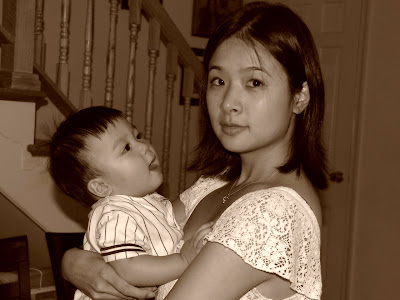
Photocredit: Dustbunny
How cute is Dustbunny's kid? He looks just like her. It is difficult to accept that an increasing proportion of my friends now have children. Here I am, feeling as if I've just graduated from college and they've all gone move to another stage of their respective lives.
It is clear from this photo how unnatural babies are to me, leading me to consider my notably deficient maternal instincts. Some (and only some) babies are cute and charming, but I prefer to admire them from afar. None of that cooing and carrying on. Sure, I would smile with passing interest when a stroller passes, but never had to urge to reach out to touch them.
Do I find myself wanting one of my own? Back in the fourth grade, my mom bought me three Cabbage Patch Kids: a redhead Stephanie, a boy Billy, and a premie Theodore. I love soft toys--cute, fluffy animals. But I didn't really want these odd-looking human dolls with their matte sticker eyes. And to be very honest, they kind of freaked me out. My kids never had their diapers changed. They wore the same clothes for days until my friends visited, when I would take them down from atop the wooden box where they stood at attention, brush off the gathering dust and go through the motions of a nurturing caregiver. But the subterfuge was thin. Once, I picked Billy off the floor by his hard plastic head, to which my best friend Gemma shrieked: "What are you doing? You can't pick up babies like that!"
Many people comment that my devotion to the biits is a good predictor of motherhood. But the very notion of having a human baby is terrifying. There are sound biological reasons to pop a few out now before my eggs deteriorate--27 is when it begins to go downhill. What I lack is the emotional reason. Having a child would force me to surrender Chiik and take on a new mommy identity. Permanently. This is no comment on the nobility of this act, but I do know that I would resent the suppression and, worse, unconsciously boomerang the bad feeling upon hypothetical child. Perhaps selfishness and narcissism keeps me from entertaining that possibility. Some people are not meant to be mothers.
Friday, September 21, 2007
The eternal rocks beneath

“The perfect man for you is someone like Dalai Lama, but an asshole,” said Tuan. Presumably, he meant someone who was emotionally and spiritually developed like the Dalai Lama. Laid-back, but with the full capability of being a badass (not asshole—else, I can only imagine what my friends take me for).
Wolper's assignment to me was to write out a list, so that I may identify certain patterns. And while I fully understand the purpose of this assignment, I feel like we're placing too much undue emphasis on Chiik's romantic life. I farmed it out to Waldorf, who could probably come up with as good a list as if I had written it myself. Or better. Here's what she came up with (in no particular order):
- not scrawny or delicate—doesn't look like he's grown up in the shade with his collars up
- knows how to throw a ball
- is able to kick some ass when called for—won't let anyone take advantage of the people he loves, and can throw a punch to make sure no one does
- isn't a picky eater
- has strengths complementary to mine (e.g.: super-social)
- isn't immediately (or ever) completely understandable—can be an emotional/psychological challenge but also presents intrigue, even if it is in small ways
- isn't small-minded
- isn't a petty complainer
- is literate
- is settled enough in his life so that he can focus on me every once in a while
- is ambitious—successful at what he does
- is even-tempered—does not fly into rages or uncontrollable bursts of anger
- is comfortable around the unconventional, but doesn't feel the need to prove it
Tuesday, September 11, 2007
It's raining
September 11th falls on a Tuesday again this year. It's not a clear day; it’s raining. These are the details we recount from that day as if to prove to ourselves of our continued connection as actors, witnesses and heirs to this event, which must continue to hold meaning. It is a public show attempting to thwart the inevitable failure of memory. It isn’t enough to do so privately:
Manhattan
We’d be thrown back into what they now knew to be the weightless irrelevance of [our] personal affairs, once more separated from ‘the world of reality’ and an épaisseur triste, the ‘sad opaqueness’ of a private life centered about nothing but itself. (Hannah Arendt, Between Past and Future, Preface)Here, Arendt refers to the gap between past and future, using the French Resistance as example of the failure to pass down the knowledge experienced during anomalous and violent ruptures in history, when men struggle against tyranny and behold what they understand to be a vision of freedom.
The treasure was lost not because of historical circumstances and the adversity of reality but because no tradition had foreseen its appearance or its reality because no testament had willed it for the future. (Hannah Arendt, Between Past and Future)We watched them reading the names on television. This year DH didn't go down there, the scar in lower
I observed him in the dark hours of that morning. His body—beautiful in sleep, stripped bare of consciousness—betrayed a nearly imperceptible yet significant shift. As I clung to him, as I had done so many times before, I knew that this momentary comfort was merely an apparition of any real feeling that had existed between us.
I imagine that for him, losing one in a long list of lovers is laughably insignificant by comparison. He’s sad, he said. Sad about us.
I guess I’m sad, too. Wolper calls it grieving, which conjures to the mind the phrase: “He’s dead to me.” This seems overly dramatic, but not necessarily inapt. There is no more us—only a him and a me, both ghosts to one another. We have a past, but no vitality, no going forward. We’re all done now, and it’s time to move on, perhaps.

Wednesday, September 05, 2007
Dr. Lame-O
We drank our coffee in subdued silence. The terrace overlooked a row of sleepy wooden rooftops and just beyond, sand and ocean. The sun shone so brilliantly that the sulking was odd, even if he was “just not a morning person.” And no amount of pleasantries and uncharacteristic chirpiness from me could improve the mood. This is what the male ego looks like when bruised. Ah well. As I am wont to do in awkward social encounters, I chose to ignore it—blotting the sullen little man from my mind and retreating further into my imagination.

“Well, I’m going to close my eyes and think about Andy Garcia,” I used to tell Ry when I found him particularly bothersome or tiresome. Ry was my ex of four undergraduate years (plus one additional) and possibly the most decent man I have met. So decent that, at the time, I didn't understand that I was bored. And I turned that boredom, quite undeservedly, into a perverse contempt. The more decent he was, the harder I pushed the limits of behavior. I guess you can call it some kind of personality defect, dear reader.
On this morning, it wasn’t Ry but a lesser man who, as I was to discover, believed that several months of occasional shared meals and the title of “friendship” entitled him to all sorts of things from me: explanations, confessions, physical intimacy, and apologies. The closer he came, the further I retreated. And in the quiet moments we spent on the island—chopping vegetables for dinner, listening to chirpy things of the evening, drinking our morning coffee—I thought about the someone else that I wanted by my side. Not Andy Garcia, although how I still love him, too!
As if intuiting my thoughts, he asked: “What kind of men do you find attractive?” I avoided a direct answer, wishing he had left the silence unbroken and dreading where this conversation would lead. After a pause and then some nonsense about compatibility, he launched into a tirade, a litany of my deficiencies as a friend. He’s known me for x-number of months and as a friend I shouldn’t be “putting up walls.” Further, he resents the fact that I don’t answer his phone calls in a timely manner, and as a friend he expects this modicum of civility, at the very least. Of course, because he considers himself “well in the middle of the neediness norm curve,” my lack of responsiveness as a friend to his friendly gestures indicates a kind of “self-centered quality” which he finds both “off-putting” and “unsettling.” At this point, he isn't even sure that he wants to sleep with me.
Here we go. I didn’t want to be confronted again about the nature of our so-called friendship, wherein he expresses his interest in advancing a romantic or sexual relationship and I express my complete indifference to that proposition. Every time I believe the matter settled, it unsettles itself again. Like now. And if by friendly gestures, he means caressing my belly and tentatively brushing up against the underside of my breast while I’m asleep on the couch, then yes, perhaps he deserves to be put off and unsettled. I've always maintained that he-and-I were not even a remote possibility. And I've disabused the notion that with the proper alchemy of environment and emotional distress, I could could be made to change my mind. Poof!
Still, I shouldn’t have agreed to come out here. The pretext for friendship was a lie, which we both used selfishly for our respective purposes. Should I feel guilty for using him as an escape hatch, to get away from that shit-storm, otherwise referred to as “my life”? Maybe. But if we are to take a purely utilitarian approach, what have I to gain from being in this strange friendship? I haven’t asked anything of him and I owe him no debt. And yet, he trumps up these grievances, using “as a friend” to now hold something against me, to elevate himself to a position to command my attention and to make me beholden to him. Not even my family and closest friends presume such access, so what makes him so special? And in all the trips that I've taken—with Trey, Huli, Dustbunny, Shani, Tuan, Xangas and Waldorf—none have attempted this sort of bullshit power play.
Because this trip was scarcely motivated by altruism. In spite of my reluctance over his offer, he persisted that this was only a friendly and Platonic favor to him:
Based on my observations of the last several days, I don’t know that I actually like him even as a friend. The reason he was out on at the beach that week was because of a certain arrangement doctors have with the community center—two hours a day at the clinic in exchange for swank lodging by the beach. It’s a sweet deal. Quite frankly, it was appalling the way he would divulge information about the walk-in cases, the way he would take my revulsion over his accounts of gonorrheal discharge and cock rings as support for his ostensible homophobia. Because to him they are not a self-selected group but typify the gay community. In the same breezy manner, he would explain how a diagnosis of fibromyalgia or IBS is a doctor’s way of telling his colleagues: “This patient is an asshole. The purported symptoms are psychosomatic.” As a confirmed hypochondriac, such cavalier attitudes within the medical profession about other people’s health is deeply unsettling. And although Dr. Lamo stopped short of revealing actual identities to stay just on this side of patient privacy, the contempt he holds for patients makes him hideous, if not outright unethical.
There is something indescribable in his movements and in his speech that give the impression of a cringing deformity. All of this is coated with a brittle veneer of snark. He is snide, covetous, prone to nasty little barbs to compensate for his nasty little insecurities. “That little bitch!” is how he referred to his Labrador who, at a moment of uncharacteristic disobedience, ran into the ocean to swim. Female canine aside, his dog’s behavior was entirely his own fault, keeping her off the leash. How was she expected to know the beach regulations? This reaction toward his beloved pet betrays a meanness—a creepy sort of impotence, which I suspect extends to human relationships. I can only imagine that names he calls me when I run off without regard to his pleasure.
You know what it all reminds me of, dear reader? The oblique sexual advances, the half-facetious innuendos, and the petty jabs? He reminds me of those thin and weak loner wolves, scavenging the peripheral area used by the pack. The misfits are most dangerous, always watching for scraps and liable to snap from repressed rage.
Perhaps you think me unkind, dear reader. But in my present mood, I can't seem to find the patience for a friendship that is entirely rooted in guilt. So if that makes me awful, so be it. I am closing my eyes and dreaming about… Andy Garcia? Or, sadly, that someone else.

P.S. I get an SMS a day later: “Are you pissed at me for some reason or are you just being you in ignoring friendly niceties?” Notice the passive-aggressive tone, phrased in such a way to induce me to defend myself against either irrationality or socially dysfunction. Ah, but he forgets that avoidance is my primary coping mechanism. So fuck it. Maybe I am both irrational and dysfunctional, but I certainly have no interest in securing his good opinion.
“Well, I’m going to close my eyes and think about Andy Garcia,” I used to tell Ry when I found him particularly bothersome or tiresome. Ry was my ex of four undergraduate years (plus one additional) and possibly the most decent man I have met. So decent that, at the time, I didn't understand that I was bored. And I turned that boredom, quite undeservedly, into a perverse contempt. The more decent he was, the harder I pushed the limits of behavior. I guess you can call it some kind of personality defect, dear reader.
On this morning, it wasn’t Ry but a lesser man who, as I was to discover, believed that several months of occasional shared meals and the title of “friendship” entitled him to all sorts of things from me: explanations, confessions, physical intimacy, and apologies. The closer he came, the further I retreated. And in the quiet moments we spent on the island—chopping vegetables for dinner, listening to chirpy things of the evening, drinking our morning coffee—I thought about the someone else that I wanted by my side. Not Andy Garcia, although how I still love him, too!
As if intuiting my thoughts, he asked: “What kind of men do you find attractive?” I avoided a direct answer, wishing he had left the silence unbroken and dreading where this conversation would lead. After a pause and then some nonsense about compatibility, he launched into a tirade, a litany of my deficiencies as a friend. He’s known me for x-number of months and as a friend I shouldn’t be “putting up walls.” Further, he resents the fact that I don’t answer his phone calls in a timely manner, and as a friend he expects this modicum of civility, at the very least. Of course, because he considers himself “well in the middle of the neediness norm curve,” my lack of responsiveness as a friend to his friendly gestures indicates a kind of “self-centered quality” which he finds both “off-putting” and “unsettling.” At this point, he isn't even sure that he wants to sleep with me.
Here we go. I didn’t want to be confronted again about the nature of our so-called friendship, wherein he expresses his interest in advancing a romantic or sexual relationship and I express my complete indifference to that proposition. Every time I believe the matter settled, it unsettles itself again. Like now. And if by friendly gestures, he means caressing my belly and tentatively brushing up against the underside of my breast while I’m asleep on the couch, then yes, perhaps he deserves to be put off and unsettled. I've always maintained that he-and-I were not even a remote possibility. And I've disabused the notion that with the proper alchemy of environment and emotional distress, I could could be made to change my mind. Poof!
Still, I shouldn’t have agreed to come out here. The pretext for friendship was a lie, which we both used selfishly for our respective purposes. Should I feel guilty for using him as an escape hatch, to get away from that shit-storm, otherwise referred to as “my life”? Maybe. But if we are to take a purely utilitarian approach, what have I to gain from being in this strange friendship? I haven’t asked anything of him and I owe him no debt. And yet, he trumps up these grievances, using “as a friend” to now hold something against me, to elevate himself to a position to command my attention and to make me beholden to him. Not even my family and closest friends presume such access, so what makes him so special? And in all the trips that I've taken—with Trey, Huli, Dustbunny, Shani, Tuan, Xangas and Waldorf—none have attempted this sort of bullshit power play.
Because this trip was scarcely motivated by altruism. In spite of my reluctance over his offer, he persisted that this was only a friendly and Platonic favor to him:
Please, don’t let me down. I just don’t want to have spend the week alone on an island full of gay men.I told him I was in a terrible emotional state and that he ought to find more pleasant company:
Good company is not required. I just don’t want to have spend the week alone on an island full of gay men.And then he offered these words, which were a lifeline to me:
Really, you should come out here, not as a favor to me, but for yourself. It is a good place for reflection and to gain perspective.I wanted to take it at face value, to understand his motives as genuine friendship and not what it really was—an attempt to manipulate the situation in service of his unspoken fantasy life.
Based on my observations of the last several days, I don’t know that I actually like him even as a friend. The reason he was out on at the beach that week was because of a certain arrangement doctors have with the community center—two hours a day at the clinic in exchange for swank lodging by the beach. It’s a sweet deal. Quite frankly, it was appalling the way he would divulge information about the walk-in cases, the way he would take my revulsion over his accounts of gonorrheal discharge and cock rings as support for his ostensible homophobia. Because to him they are not a self-selected group but typify the gay community. In the same breezy manner, he would explain how a diagnosis of fibromyalgia or IBS is a doctor’s way of telling his colleagues: “This patient is an asshole. The purported symptoms are psychosomatic.” As a confirmed hypochondriac, such cavalier attitudes within the medical profession about other people’s health is deeply unsettling. And although Dr. Lamo stopped short of revealing actual identities to stay just on this side of patient privacy, the contempt he holds for patients makes him hideous, if not outright unethical.
There is something indescribable in his movements and in his speech that give the impression of a cringing deformity. All of this is coated with a brittle veneer of snark. He is snide, covetous, prone to nasty little barbs to compensate for his nasty little insecurities. “That little bitch!” is how he referred to his Labrador who, at a moment of uncharacteristic disobedience, ran into the ocean to swim. Female canine aside, his dog’s behavior was entirely his own fault, keeping her off the leash. How was she expected to know the beach regulations? This reaction toward his beloved pet betrays a meanness—a creepy sort of impotence, which I suspect extends to human relationships. I can only imagine that names he calls me when I run off without regard to his pleasure.
You know what it all reminds me of, dear reader? The oblique sexual advances, the half-facetious innuendos, and the petty jabs? He reminds me of those thin and weak loner wolves, scavenging the peripheral area used by the pack. The misfits are most dangerous, always watching for scraps and liable to snap from repressed rage.
Perhaps you think me unkind, dear reader. But in my present mood, I can't seem to find the patience for a friendship that is entirely rooted in guilt. So if that makes me awful, so be it. I am closing my eyes and dreaming about… Andy Garcia? Or, sadly, that someone else.
P.S. I get an SMS a day later: “Are you pissed at me for some reason or are you just being you in ignoring friendly niceties?” Notice the passive-aggressive tone, phrased in such a way to induce me to defend myself against either irrationality or socially dysfunction. Ah, but he forgets that avoidance is my primary coping mechanism. So fuck it. Maybe I am both irrational and dysfunctional, but I certainly have no interest in securing his good opinion.
Monday, August 27, 2007
NYC Noir
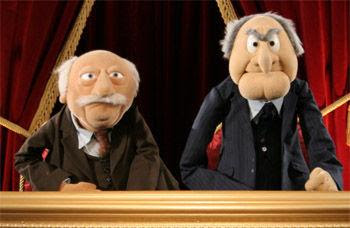
Waldorf is leaving NY at the end of this month. Among the countless ways that would adversely change my life here, it also means I must get used to going to movies alone. And without anyone to tolerate my pontificating after each screening, that burden will have to fall on you, dear reader.
Short of love and friendship, watching certain films in 35 mm is as close to true happiness as I can get. Which was why Rear Window at Film Forum was an unexpected blessing after a most hideous week.
Lisa: You don't think either one of us could ever change?
Jeff: Right now, it doesn't seem so.
Lisa: I'm in love with you. I don't care what you do for a living. I'd just like to be part of it somehow. It's deflating to find out the only way I can be part of it is to take out a subscription to your magazine...
Out of the corner of my eye, I could see Waldorf looking over at me nervously, knowing that these lines have a certain resonance with my own personal struggles. I nearly choked from the onslaught of sorrow and rage—that I could allow it to taint one of my most treasured films is troubling. Very troubling. “I took him to this restaurant once… he said it was the best [sobs]… scallops [sobs]… he ever had!… [sob, sob, sob]. “Did you order scotch? That was his drink… [sobs].” “What is that you have there [gulp] —a guitar? Oh god… [sobs].” To some extent, grieving in such a way is unavoidable. But, I would not want to force my friends to deal with a melodramatic and self-pitying Chiik. Is there anything more tiresome and unfair? And if I start to behaving like an emotional cripple, I really hope that someone would take a bludgeon to my head. Having seen this newly restored print for the first time, I noticed several new details that really enhance the experience. “I hope it’s cooked this time.” She flung the rose from the meal tray—the meal which Thorwald so lovingly prepared. Here was Lars Thorwald, a door-to-door costume jewelry salesman, trapped with a bedridden nag who doesn't love him. It inspires pity. I know it isn’t an excuse for adultery and offing his wife, but I am sure this wasn't the life that he wanted.
What I want is to avoid that trap of inflating ordinary and fundamental daily occurrences into maudlin reminders:
So enough.
On the big screen, you can see what L.B. Jeffries sees. Now I know why he is totally hooked, rear-window ethics be damned. It’s like Flickr. From the smoke from Miss Lonelyhearts’s candles to the crumbs on Miss Torso’s chest. Both ladies are less attractive than I remembered. Knives and saws wrapped in newspaper. You finally understand how Jeffries could possibly know that Lars Thorwald was dialing long distance and see the details of the rings as he holds each one up. And it is much easier to spot the shrinking yellow zinnias.
To date, Thorwald had just been the bad guy—a cheating louse who wanted to throw over his invalid wife for another woman. He's going to run out on her, the coward! But because the conversation fragments are much less audible on my TV than in the theater, I had no way of understanding how awful the Mrs was. She's a total harpy.
Worse, Mrs. Thorwald took perverse pleasure in Thorwald's predicament, mocking his proverbial impotence, taunting him: “Ha! Did you tell her you were married?? [holding her belly as if she were cackling]” Before this, I had only seen the gesture without the audio context. Sheesh. And he had a serious five-o’clock-shadow and bloodshot eyes the day after. Poor Lars. He must have been exhausted. And of all the bad luck to have L.B. Jeffries (in a cast) as a neighbor—busybody in possession of bionic hearing, flabby body, and telephoto lenses.
Cody sent an email with a single line: "We have to get moving on our sequel." Attached was an article from the Guardian called 'Of all the beachfront restaurants in India, she walks into mine' reporting on a Bollywood remake of Casablanca. This reminded me of something. We were going to start a production company—one that specializes in making unmakeable sequels.
For a start:
Waldorf’s
“Thank you, Lars!”
Synopsis: L.B. Jeffries and Lisa Fremont finally marry and have their honeymoon in the Brazilian rainforest—without raincoats. In their cozy little bungalow, the bickering escalates. Jeffries snaps and uses all the techniques that he observed from Lars Thorwald to dispose of his new wife.
Cody’s
“Return to Rick’s”
Synopsis: The Nazis intercept Victor Laszlo’s plane before it could reach Lisbon. He is killed. Ilsa narrowly escapes and finds Rick and Louis on another island. She would like Rick to help with the cause. Sasha the barman turns on Rick and help the Nazis. Rick's choices are stay where he is, help Ilsa, or return to New York (which he left because of another woman, in flashback sequence).
Chiik’s
“The Sneaky Russian”
Synopsis: Gutman and Joel Cairo break Brigid O’Shaughnessy out of prison. They recruit a reluctant Sam Spade for a little game of revenge. Spanning across three continents, the gang tracks down Kemidov and beats the tar out of him. But this time, it’s Wilmer that gets the last laugh.
Friday, August 24, 2007
Insomnia
I can deal with the drama. It's the absence that's hard.

Go ahead. Ask me what I'm doing at these early hours of the morning. I'm sure you couldn't guess. Here I am, standing by the kitchen counter, face swollen from the constant tears, reeking from cigarettes, fingers shoving moist chunks of barbecue brisket into my mouth.
I'm going to be sick.
I've deleted his messages from my phone. Every one. As far back as October. When you really add up all the days and hours, it probably didn't amount to any more than two or three months. He had such a presence in my mind, though, for this past year that is it difficult to make that disappear. I don't know that I want to.
I miss him.
Go ahead. Ask me what I'm doing at these early hours of the morning. I'm sure you couldn't guess. Here I am, standing by the kitchen counter, face swollen from the constant tears, reeking from cigarettes, fingers shoving moist chunks of barbecue brisket into my mouth.
I'm going to be sick.
I've deleted his messages from my phone. Every one. As far back as October. When you really add up all the days and hours, it probably didn't amount to any more than two or three months. He had such a presence in my mind, though, for this past year that is it difficult to make that disappear. I don't know that I want to.
I miss him.
Thursday, August 23, 2007
I was right...
... it is worse than anticipated.
I have nothing new or profound to contribute to all the awful blogging on breakups. I'm unwell, which is to be expected. But rest assured, dear reader, I am in no danger of plunging myself into Crazy Valley. Thus far, I've used my brain to the utmost, in order to anesthetize myself for it. But it is difficult to sustain detachment from one's emotions and as with all opiates, that numbing effect has worn off.
Here are a few things that I am thinking:
I have nothing new or profound to contribute to all the awful blogging on breakups. I'm unwell, which is to be expected. But rest assured, dear reader, I am in no danger of plunging myself into Crazy Valley. Thus far, I've used my brain to the utmost, in order to anesthetize myself for it. But it is difficult to sustain detachment from one's emotions and as with all opiates, that numbing effect has worn off.
Here are a few things that I am thinking:
- My favorite translation of the ideogram 愛 (ai) is Burton Watson's: "cannot bear to part with" because it better captures the agony than the abstract and more commonly translated term "love." I'm having a difficult time with the idea that I will probably never see him again.
- As Trey says: Why can't people just act right? It is startlingly simple, but this is a pervasive concern. More specific to this situation, an aversion to hurt him competes with that interest of making myself intelligible to him, seeing him answerable for his conduct. If he could experience even a modicum of my pain, would he be able to justify it?
- I regret not having absconded with one of his t-shirts from the hamper. I'm sure that the idea is repugnant/unhygienic to you, dear reader. And I'm sure that the last thing I need at this point is to be curled up in bed sobbing my eyes out into a raggedy wad of cotton. But, he really is the best-smelling guy I've known.
Wednesday, August 22, 2007
Apostasy
“Lucretius anticipated David Hume in saying that the prospect of future annihilation was no worse than the contemplation of the nothingness from which one came.” As you might have guessed, dear reader, I’ve been flipping through Christopher Hitchens’s latest book. It isn’t a startling argument that most people are possessed of a religious impulse to worship in order to allay that fear of nonexistence, to survive death and achieve immortality—that they, however brilliant, will choose to eschew reason for the illusion that “there exists a god who concerns himself with the fates and actions of human beings.”
So here I am, appropriating Hitchens’s appropriation of Lucretius (or Hume) and presenting it to you, dear reader, third- or fourth-hand. My purpose is not to discuss religion, but faith of a different sort. A realization. I never considered myself “prone to that solipsism…which imagines that the universe is preoccupied with one’s own faith.” In spite of this, I surprise myself in the past year by the willingness to which I ceded over my confidence and faith to just this fallacy: my dependence on love from some external source, without which my happiness would be incomplete. Nothing but my own willingness to examine all of the evidence will have me understand that I have been alone all along, it seems.
Once loneliness holds no terror, it is easy to see: (1) the love that I imagined may not and likely does not exist except in abstract. To borrow and vulgarize Kant’s ontological argument (as stated by Betrand Russell), the Darcy that I merely imagine have all the same predicates as a real Darcy. (2) what’s more, I don’t need him.
This is not to say that ending this will be painless. In fact, it will probably be worse than I can now anticipate. All I can do is remind myself that I haven’t gained or lost a thing. It’s all been a dream…
Wednesday, August 08, 2007
Winky and "the Brain"

“Yeah? If you’re so smart, what’s a half divided by a third?”
I stared at him in disbelief. When I tell people what I do for a living, that isn’t usually their response.
“Anyone can talk… got any money on you? Want to bet on it? How much?”
Before the trip, DH predicted that she and I would get on well. We are so alike, he said. I'll totally love her. Now that I've met her, I can't say that I appreciate the comparison. Then again, men are less attuned to female territoriality. And it is difficult to cozy up with any woman who behaves as one's mere existence was a personal affront.
She has difficulty addressing me except in the third person, communicating with me only through other people in the room. She does give a grudging direct answer when I ask her a direct question. But even in such situations, her eyes are fixed on some point on the floor or the wall, as if she’s talking to the furniture. Because she has no reason to address me as a peer, an adult. To countervail the perceived threat of a significantly younger woman, Winky sought to reduce me (ostensibly, the significantly younger woman) to the diminished status and mental capacity of a child.
Else, how can we account for her gasp of horror when she overheard me confess to Toby that I do not read Bukowski? "OH MY GOD! I LOVE Bukowski! Toby, don't you love Bukowski? DH, Bukowski is your favorite, right?”1 Indeed. I might just be an illiterate yokel, but Bukowski isn't exactly the voice of my generation, man.
Or consider this comment to her 15-year-old son while his father, DH, and I sat around, each drinking beer, contemplating the division of 1/2 by 1/3: “Son, I would have given you a beer, but Chiik drank the last one.” Had I known it was the last one, I would have certainly reserved it for the enjoyment of her underage son. But it wasn’t DH or DH’s brother, but I who took her son’s beer, because we are in the same age group? Of course, this is all predicated on the assumption that as a medical doctor, she possesses a level of sophisticated power-play that goes beyond “Chiik is a jerk for drinking the last beer.”
I can accept that members of DH's family may simply not like me. I have been disliked by far worthier people, who have had cause. Dear reader, why can't people just act right? It's not just the fractional arithmetic, or the wagering, or Bukowski, or internal beverage politicking. It's just exhausting having to mind the tedious or the small-minded, who look only to inflict damage by scores of psychological papercuts.
Thursday, June 28, 2007
Wednesday, May 30, 2007
All the world's a stage, And all the men & women merely lamos
My phone buzzed once. Someone had just sent me a text at 2 a.m. Perhaps it was Waldorf or Huli recounting a saucy tale. Or DH leaving a sexy message before bed. Or some entertaining drunk-messaging. Nope. It was none of the above:
Oh, dread. My ex is blogging.
Check out my new blog, thedesperationlettres.blogme.com
Oh, dread. My ex is blogging.
Thursday, May 03, 2007
ESP
On our way back from the thermal pools at Laugardalslaug, I wondered if my private ruminations may not be as private as I believed. We had been walking in silence for several minutes—me, engaged in my own secret conversations. For a moment, I feared that my body language or facial expressions had betrayed thoughts from the inner recesses of my mind.
“Do you ever suspect that other people can read your thoughts?” I asked.
“Yes, absolutely.” said Waldorf. At one point in her young life, she was convinced that her elementary school teacher, Mr. Pooperton, could read her mind. And if he could do it, that meant that any number of people could. It was like colorblindness, realizing that others have sensory perception of which you are incapable. As a preventative measure, she'd stalk through the halls issuing this telepathic warning: “I know you can read my mind. I know you can read my mind. Stop it. STOP IT!”
There is nothing extra-sensory about reading someone’s personal blog. All it takes is some keywords and Google. One could hardly fault others for reading what one chooses to express so publicly. Blogs ostensibly provide keyhole-glimpses into a person’s most intimate thoughts, but they are ultimately public performances. It is another matter altogether when those who know me see me in this constructed persona.
I know you can read my blog…
I know you can read my blog…
Stop it…
Stop it!
“Do you ever suspect that other people can read your thoughts?” I asked.
“Yes, absolutely.” said Waldorf. At one point in her young life, she was convinced that her elementary school teacher, Mr. Pooperton, could read her mind. And if he could do it, that meant that any number of people could. It was like colorblindness, realizing that others have sensory perception of which you are incapable. As a preventative measure, she'd stalk through the halls issuing this telepathic warning: “I know you can read my mind. I know you can read my mind. Stop it. STOP IT!”
There is nothing extra-sensory about reading someone’s personal blog. All it takes is some keywords and Google. One could hardly fault others for reading what one chooses to express so publicly. Blogs ostensibly provide keyhole-glimpses into a person’s most intimate thoughts, but they are ultimately public performances. It is another matter altogether when those who know me see me in this constructed persona.
I know you can read my blog…
I know you can read my blog…
Stop it…
Stop it!
Wednesday, April 11, 2007
Letter
Right now, I am a little bit drunk, which means that my thoughts may be less restrained, but perhaps it is a good thing. If the past is any indicator, perhaps restraint has contributed to some of the problem. And since I have promised not to hold anyone responsible for expectations that I have not explicitly made, I ought to say something now.
I was troubled by your last SMS, unsure whether you believed it a sufficient response or if it was meant to shrug off a potentially difficult conversation. The flaw or beauty of text messaging depends on how much or little one wants to communicate with the recipient. "Me too." It is quite ambiguous about which of my feelings you are identifying with—presumably, my “I’ll be honest I’m disappointed.” But, my disappointment is different. Am I upset that you've cancelled on me Friday, Saturday, and Sunday night in succession? A little. Were it an isolated event, it would be a non-issue. But my disappointment, stems not from a specific instance—namely whether I see you this weekend—but relates to this persistent and unchanging pattern.
I don’t want to tread over the same tired ground—begging for attention from one who purports to care about me—as I am sure you are weary of having to point out your overcommitted schedule, responsibilities and lack of spare time. But, it shouldn’t be like this. I’ve always agreed with you that we all ought to have our own lives and not necessarily live for one another. Still, that doesn’t mean I should forfeit my desire to actually be a part of your life. What I could never figure out is why you would actively seek out a serious relationship if you knew you didn’t have time to maintain one. It didn’t occur to me that when you were expressing your ever-decreasing availability, it was a euphemism for ever-decreasing interest. That is, maybe you do have time for a relationship—just not with me.
Nobody is that busy.
We left these issues unresolved, to be discussed after Japan. Perhaps I should have insisted on it, but I was just happy to see you on your return, content for the moment to leave it all at the door. I now think about the few times when we did get around to talking about compatibility, you always ask me what I want from a relationship: Marriage? Children? To me, these aren’t requirements. But this is not to say that I have no expectations or needs.
What I need is something that cannot be squeezed within the confines of a few hours once a week—a willingness to be a part of my inner life. You can’t do this via text messaging. You can't experience that over IM. You can't catch all the tiny little bits that accrete to a loving relationship through a one-minute telephone conversation.
I’m in love with you, but I’m not feeble-minded nor am I in the business of being any man's mistress. For the last month, you’ve been keeping me at arms length. And I didn’t/don’t understand why. It scares me to posit a guess for fear that it might just be realized. If you're seeing someone else, want to see someone else, or no longer care to be with me, then please be honest. Even if we can’t manage my confidence, then at the very least it would be an improvement in managing my expectations for things to come.
I was troubled by your last SMS, unsure whether you believed it a sufficient response or if it was meant to shrug off a potentially difficult conversation. The flaw or beauty of text messaging depends on how much or little one wants to communicate with the recipient. "Me too." It is quite ambiguous about which of my feelings you are identifying with—presumably, my “I’ll be honest I’m disappointed.” But, my disappointment is different. Am I upset that you've cancelled on me Friday, Saturday, and Sunday night in succession? A little. Were it an isolated event, it would be a non-issue. But my disappointment, stems not from a specific instance—namely whether I see you this weekend—but relates to this persistent and unchanging pattern.
I don’t want to tread over the same tired ground—begging for attention from one who purports to care about me—as I am sure you are weary of having to point out your overcommitted schedule, responsibilities and lack of spare time. But, it shouldn’t be like this. I’ve always agreed with you that we all ought to have our own lives and not necessarily live for one another. Still, that doesn’t mean I should forfeit my desire to actually be a part of your life. What I could never figure out is why you would actively seek out a serious relationship if you knew you didn’t have time to maintain one. It didn’t occur to me that when you were expressing your ever-decreasing availability, it was a euphemism for ever-decreasing interest. That is, maybe you do have time for a relationship—just not with me.
Nobody is that busy.
We left these issues unresolved, to be discussed after Japan. Perhaps I should have insisted on it, but I was just happy to see you on your return, content for the moment to leave it all at the door. I now think about the few times when we did get around to talking about compatibility, you always ask me what I want from a relationship: Marriage? Children? To me, these aren’t requirements. But this is not to say that I have no expectations or needs.
What I need is something that cannot be squeezed within the confines of a few hours once a week—a willingness to be a part of my inner life. You can’t do this via text messaging. You can't experience that over IM. You can't catch all the tiny little bits that accrete to a loving relationship through a one-minute telephone conversation.
I’m in love with you, but I’m not feeble-minded nor am I in the business of being any man's mistress. For the last month, you’ve been keeping me at arms length. And I didn’t/don’t understand why. It scares me to posit a guess for fear that it might just be realized. If you're seeing someone else, want to see someone else, or no longer care to be with me, then please be honest. Even if we can’t manage my confidence, then at the very least it would be an improvement in managing my expectations for things to come.
Monday, April 09, 2007
Dim Sum
Chinatown Brasserie is 21st century chinoiserie in full force, an upscale interpretation of a stereotype wrapped up with the conceit of a swanky New York brasserie. The place is big, theatrical, and oriental. Such a thematic approach immediately makes the restaurant suspect, like other uber-trendy Asian-monoliths, serving up stylish but ultimately poseur variants of familiar dishes. Especially since dim sum bespeaks a certain modesty, in size and concept.
"Are you sure you want to eat here?" he asked.

Still, if Chef Ng did not exactly prove my suspicions incorrect, he did challenge my automatic distrust of non-regulation dim sum environments. This dish, Crispy Taro Root Shimp, was quite good, if the presentation is a bit precious. The buns were only serviceable and the soup dumplings were a cold leaky disaster of congealed crab and pork bits.
Although dim sum is usually an accompaniment of tea service, it is most appropriate to have drinks at a brasserie. The restaurant offers a fruity range of specialty cocktails, Lychee Martini, Ginger Mojito, and the Singapore Sling. The ginger essence in the Arancia Margarita made it a refreshing choice, if a little too sweet—perfect for sidewalk seating on the first warm weekend in April. The menu also offers a wide range of international wines and bottled beer.
The prices of the dim sum range from $6 to $20 at dinner, which is astronomical by Chinatown standards. One would expect the execution of even the classic to be impeccable. But the uneven level of quality means that the diner pays a premium for fancy plating and theatrical décor, making the overall experience a poor value.
"Are you sure you want to eat here?" he asked.
Still, if Chef Ng did not exactly prove my suspicions incorrect, he did challenge my automatic distrust of non-regulation dim sum environments. This dish, Crispy Taro Root Shimp, was quite good, if the presentation is a bit precious. The buns were only serviceable and the soup dumplings were a cold leaky disaster of congealed crab and pork bits.
Although dim sum is usually an accompaniment of tea service, it is most appropriate to have drinks at a brasserie. The restaurant offers a fruity range of specialty cocktails, Lychee Martini, Ginger Mojito, and the Singapore Sling. The ginger essence in the Arancia Margarita made it a refreshing choice, if a little too sweet—perfect for sidewalk seating on the first warm weekend in April. The menu also offers a wide range of international wines and bottled beer.
The prices of the dim sum range from $6 to $20 at dinner, which is astronomical by Chinatown standards. One would expect the execution of even the classic to be impeccable. But the uneven level of quality means that the diner pays a premium for fancy plating and theatrical décor, making the overall experience a poor value.
Thursday, April 05, 2007
Night at the Opera
"I'm going to have to read up on this because I don't understand this shit," said Huli.
We has just seen the Met's long-awaited production of Die Ägyptische Helena. The music was pretty, if not exactly anything I would find myself humming after the performance. I realize that this was not intended to be Il Barbiere di Siviglia, but without any knowledge of Strauss or 20th century opera, I can only appreciate it with my eyes. Like the Germans sniggering in the row behind us, I found the production design highly amusing—colossal phallic comets, albino elves fluttering about in gauze and sunglasses, Poseidon's aqua besuited soldiers brandishing oversized harpoons, a towering bald Paris painted from head to toe in red, backdrops of seas and deserts overlayed by a gigantic decoupage of a fleeing man.

The story is an interpretation of Helen and Menelaus's reconciliation after he rescues her from Troy—marriage counseling courtesy of Aithra the sorceress. The best moment: opening of Act II, after their second wedding night (“Zweite Brautnacht”), Helen rolls around onstage in post-coital bliss. Menelaus wakes up, looks at Helen and says: I'm sorry. Who are you? And What is your name? Typical.
The finer points of the opera elude me, but the themes of psychological torment—the yearning for innocence, forgetfulness, and remembrance—touched me in ways that traditional Italian operas have not.
Now, if only I had an Omniscient Mussel to comfort me while I await the return of my lover.
We has just seen the Met's long-awaited production of Die Ägyptische Helena. The music was pretty, if not exactly anything I would find myself humming after the performance. I realize that this was not intended to be Il Barbiere di Siviglia, but without any knowledge of Strauss or 20th century opera, I can only appreciate it with my eyes. Like the Germans sniggering in the row behind us, I found the production design highly amusing—colossal phallic comets, albino elves fluttering about in gauze and sunglasses, Poseidon's aqua besuited soldiers brandishing oversized harpoons, a towering bald Paris painted from head to toe in red, backdrops of seas and deserts overlayed by a gigantic decoupage of a fleeing man.
The story is an interpretation of Helen and Menelaus's reconciliation after he rescues her from Troy—marriage counseling courtesy of Aithra the sorceress. The best moment: opening of Act II, after their second wedding night (“Zweite Brautnacht”), Helen rolls around onstage in post-coital bliss. Menelaus wakes up, looks at Helen and says: I'm sorry. Who are you? And What is your name? Typical.
The finer points of the opera elude me, but the themes of psychological torment—the yearning for innocence, forgetfulness, and remembrance—touched me in ways that traditional Italian operas have not.
Now, if only I had an Omniscient Mussel to comfort me while I await the return of my lover.


Wednesday, April 04, 2007
My familiar
MISSING

Have you seen this bird?
I never understood how Kim Novak allowed herself to be so careless, losing her powers to a mortal man. The cost seems too high even if the man happens to be Jimmy Stewart. I am, of course, referring the 1958 film Bell, Book & Candle. In Act 2 turning point, Novak summons her familiar, Piwacket, to do her bidding, to cast a final horrible spell, to punish her lover, to avenge herself. Instead, Pi hisses and claws at his mistress as if she were a stranger. His defection is inexplicable until we discover Novak crying. Because witches are supposed to be incapable of emotion, her tears mark an irreversible transformation.
I'd prefer not to think overmuch about why I rely on moderately-successful 1950s films as a primary point of reference in relationships, rather than drawing upon real-life examples. My father did not exactly provide the best model for caring functional relationships. And although I have long forgiven him for being a gaping, if well-intentioned, void in his daughter’s life, his absence during the seminal years of development have left gaps in my emotional intelligence—that is, gaps filled by conventions of classic Hollywood movies.
It is embarrassing for me to admit that in my innermost imaginings of romantic love, my leading man and I are fabulously dressed, drinking gibsons, exchanging witty repartee through a series of medium close-ups and reverse shots. But beyond the artifice, I envisioned at core that perfectionism found only in films of that era—in Gary Cooper, Jimmy Stewart, Gregory Peck, and, my beloved Humphrey Bogart. So even if Novak was silly enough to lose her identity, I wanted Stewart to be the kind of mortal man who deserved her. Perhaps this is setting myself up for certain disappointment in real life, but only because the standards to which people normally hold themselves are lax and not that the earlier standards are unreasonable or unattainable.
Then again, there comes a moment when it is appropriate to let go of childish notions and own up to one’s own inadequacies rather than point to the failings of others. In other words, I don’t exactly measure up to leading lady material. And, just sitting here conjuring exemplars for this argument, even my own heroes prove imperfect. If Grace Kelly had to struggle with Jimmy Stewart over his fear of commitment (Rear Window) and if Audrey Hepburn had such a tough time converting a much-older Gary Cooper from serial philandering (Love in the Afternoon), what chance do I have? Bogart is another story. Although I have yet to be a “Slim” to someone’s “Steve” (To Have and Have Not), I did have serious involvements with modern-day equivalents of Fred C. Dobbs (Treasure of the Sierra Madre) and Dixon Steele (In a Lonely Place). That’s right: one paranoid and one rage-aholic, both liable to beat the shit out of anyone over the slightest perceived insult. Really really unpleasant. The point is, we can't choose the real-life movies we star in. All we can do is hope that it doesn't end up a bloody tragedy.
Have you seen this bird?
I never understood how Kim Novak allowed herself to be so careless, losing her powers to a mortal man. The cost seems too high even if the man happens to be Jimmy Stewart. I am, of course, referring the 1958 film Bell, Book & Candle. In Act 2 turning point, Novak summons her familiar, Piwacket, to do her bidding, to cast a final horrible spell, to punish her lover, to avenge herself. Instead, Pi hisses and claws at his mistress as if she were a stranger. His defection is inexplicable until we discover Novak crying. Because witches are supposed to be incapable of emotion, her tears mark an irreversible transformation.
-She's in love.Love in the movies does not make any logical sense. How could a woman of such strength, beauty, and talent succumb to the jealousies and insecurities of mortal love? And why? This is completely beneath her, a betrayal of her character. Worse, it is a betrayal of me, who up until that moment believed Gillian Holroyd (Novak) to be cool and in control, only to watch her rendered powerless and ordinary by a man. Again, even if he is played by Jimmy Stewart, he is only a man. See where I’m going with this, dear reader?
-Wouldn't she rather be dead?
I'd prefer not to think overmuch about why I rely on moderately-successful 1950s films as a primary point of reference in relationships, rather than drawing upon real-life examples. My father did not exactly provide the best model for caring functional relationships. And although I have long forgiven him for being a gaping, if well-intentioned, void in his daughter’s life, his absence during the seminal years of development have left gaps in my emotional intelligence—that is, gaps filled by conventions of classic Hollywood movies.
It is embarrassing for me to admit that in my innermost imaginings of romantic love, my leading man and I are fabulously dressed, drinking gibsons, exchanging witty repartee through a series of medium close-ups and reverse shots. But beyond the artifice, I envisioned at core that perfectionism found only in films of that era—in Gary Cooper, Jimmy Stewart, Gregory Peck, and, my beloved Humphrey Bogart. So even if Novak was silly enough to lose her identity, I wanted Stewart to be the kind of mortal man who deserved her. Perhaps this is setting myself up for certain disappointment in real life, but only because the standards to which people normally hold themselves are lax and not that the earlier standards are unreasonable or unattainable.
Then again, there comes a moment when it is appropriate to let go of childish notions and own up to one’s own inadequacies rather than point to the failings of others. In other words, I don’t exactly measure up to leading lady material. And, just sitting here conjuring exemplars for this argument, even my own heroes prove imperfect. If Grace Kelly had to struggle with Jimmy Stewart over his fear of commitment (Rear Window) and if Audrey Hepburn had such a tough time converting a much-older Gary Cooper from serial philandering (Love in the Afternoon), what chance do I have? Bogart is another story. Although I have yet to be a “Slim” to someone’s “Steve” (To Have and Have Not), I did have serious involvements with modern-day equivalents of Fred C. Dobbs (Treasure of the Sierra Madre) and Dixon Steele (In a Lonely Place). That’s right: one paranoid and one rage-aholic, both liable to beat the shit out of anyone over the slightest perceived insult. Really really unpleasant. The point is, we can't choose the real-life movies we star in. All we can do is hope that it doesn't end up a bloody tragedy.
Friday, March 30, 2007
Petit Fours
I hate myself.
What does one do on a sleepless night?


Bake cookies for rabbits. Inspired by Tomoko's healthy dog-snack bakery and a bunny biscuit recipe from Mommy24bunnies, the biits can now have some carrot-banana oatmeal cookies this weekend.
What does one do on a sleepless night?
Bake cookies for rabbits. Inspired by Tomoko's healthy dog-snack bakery and a bunny biscuit recipe from Mommy24bunnies, the biits can now have some carrot-banana oatmeal cookies this weekend.
Thursday, March 29, 2007
Lampyridae
To me, it was a typical college town, but to hear Tuan and Xangas reminisce, even its ordinary places take on a mythical quality. It was not my alma mater, but what impressed me was the fixed sameness of the undergraduate experience. There were the stories about greasy spoons, watering holes, professors, pranks, basketball games, hallucinogenic drugs, roommates, crushes, relationships long dispersed.

Yale was a hermetically-sealed jar of fireflies, enclosing us for a brief moment in this rarified incandescence before floating us out to the wilderness. Then, social concerns centered around the hilarity of dining hall seating, laundry room etiquette, pretentious 3 a.m. debates on the biological roots of human nature, a shitload of coffee, homemade spa treatments, and the sheer worth of innocence. Now, as attorneys, professors, surgeons, etc., they’ve taken on the weight of marriage, parenthood, alternative minimum taxes, and mortgages.
Somehow, this firefly flew straight into a tempest, emerging years later wind-blown and lost. DH asked me if this was what I wanted, what normal people want, a down payment on emotional security. Do I want a husband? Do I want children? Are we finished? What now? I wonder if this—the anger, hope, fear, strength—is simply a resurgent adolescence, recovering once more all the intensity of feeling that has since eroded over time. I'm weary of it.
What I want: to recover my faith in the exceptional life I intended to lead.
Yale was a hermetically-sealed jar of fireflies, enclosing us for a brief moment in this rarified incandescence before floating us out to the wilderness. Then, social concerns centered around the hilarity of dining hall seating, laundry room etiquette, pretentious 3 a.m. debates on the biological roots of human nature, a shitload of coffee, homemade spa treatments, and the sheer worth of innocence. Now, as attorneys, professors, surgeons, etc., they’ve taken on the weight of marriage, parenthood, alternative minimum taxes, and mortgages.
Somehow, this firefly flew straight into a tempest, emerging years later wind-blown and lost. DH asked me if this was what I wanted, what normal people want, a down payment on emotional security. Do I want a husband? Do I want children? Are we finished? What now? I wonder if this—the anger, hope, fear, strength—is simply a resurgent adolescence, recovering once more all the intensity of feeling that has since eroded over time. I'm weary of it.
What I want: to recover my faith in the exceptional life I intended to lead.
Friday, March 23, 2007
Damn pigeons
Fang Geh Zi is a Chinese idiom that translates literally: to release the pigeons. It means to ditch. To cancel. Invalidate. Nullify.
SMS at 12:44 p.m. He couldn't make it to lunch today. There was a crisis at work.
Little did he know the new crisis that was just born.
SMS at 12:44 p.m. He couldn't make it to lunch today. There was a crisis at work.
Little did he know the new crisis that was just born.
Thursday, March 22, 2007
Chowderhead is hungry
Violet tells me that I should stop casting negative spells on myself—my words can come true if I am not careful. But what if they already are true?
I feel like aloser chowderhead today. There, I’ve said it. In fact, I have been a loser chowderhead this whole month. I got A’s on mid-terms with minimal effort, but scored a big fat C- on my personal project. I don’t know why I do not try harder to impress the people that matter—the ones that actually care about me and not the ones who do so in words only.
I left class at 8:30 p.m. with nowhere to go, having been cancelled-on by the same man today. 12:58 p.m.-Flight delayed. How about tomorrow? 3:03 p.m.-Oops! Daughter’s play is tomorrow evening so that’s bad, too. Lunch? Bollocks. I’m going to Pearl’s.

A lot has been made of the rivalry between Pearl’s and Mary’s: Who makes a better lobster roll? For my money, that’s really asking the wrong question. Why Pearl’s? The Brussels sprouts, dear reader. I pounded on the counter and asked the waitress for a plate of it, a big heaping portion, two to three servings on one dish. Did I know that it comes with carrots, parsnips, and lardons, she asked. But, of course!
Perhaps it was wrong of me to find solace in food after two hours of blowing hot air on socioeconomic disparities and the institutionalization of hunger. Oh wait, sorry. “Food instability” is what we’re calling it now. Because “hunger” is an emotionally charged word, embedded from infancy with ideas of well-being and love.
I feel like a
I left class at 8:30 p.m. with nowhere to go, having been cancelled-on by the same man today. 12:58 p.m.-Flight delayed. How about tomorrow? 3:03 p.m.-Oops! Daughter’s play is tomorrow evening so that’s bad, too. Lunch? Bollocks. I’m going to Pearl’s.
A lot has been made of the rivalry between Pearl’s and Mary’s: Who makes a better lobster roll? For my money, that’s really asking the wrong question. Why Pearl’s? The Brussels sprouts, dear reader. I pounded on the counter and asked the waitress for a plate of it, a big heaping portion, two to three servings on one dish. Did I know that it comes with carrots, parsnips, and lardons, she asked. But, of course!
Perhaps it was wrong of me to find solace in food after two hours of blowing hot air on socioeconomic disparities and the institutionalization of hunger. Oh wait, sorry. “Food instability” is what we’re calling it now. Because “hunger” is an emotionally charged word, embedded from infancy with ideas of well-being and love.
Feeding is more than the squirting of nutrients into a gastrointestinal tract…It is a situation of embrace, pressure, contact, fondling, cooing, tickling, talking, stroking, squeezing; it is the warmth of the body, the pulsation of the parent’s heart, the brushing of her lips, the smells of her secretions. This extended environment reinforces the child’s fused image of security and food. (Willard Gaylin, In the Beginning Helpless and Dependent)The waitress laughed when she saw me. I was a ravenous biit before a bowl of julienned carrots. I had the urge to put down my fork, stick my face into the steaming dish, and savage the vegetables. The French woman sitting to my left stared for a minute, checked her menu, and then leaned over towards me.
-Excuse me, what are you eating? Whatever it is, it smells great.
-Bwussels Spwouts!
You ask if I am drunk, dear reader. After three and a half glasses of Sancerre with only Brussels sprouts in my belly, you’re goddamn right I’m drunk.NOTE: The recent Joint FAO/WHO Expert Consultation on diet, nutrition and the prevention of chronic diseases, recommended the intake of a minimum of 400g of fruit and vegetables per day (excluding potatoes and other starchy tubers) for the prevention of chronic diseases such as heart disease, cancer, diabetes and obesity, as well as for the prevention and alleviation of several micronutrient deficiencies, especially in less developed countries. (FAO/WHO, September 2004)
Wednesday, March 21, 2007
Sea cucumbers
I told him that I didn’t want it, didn’t like it. My left hand extended over my plate to block the offering. But my father scooped a heaping pile anyway, disregarding my repeated refusals and nudging my hand aside with the communal spoon. He dribbled a brown slug-trail from the center platter, across my left knuckles, and onto my dinner plate.
I wiped the back of my hands on the pink tablecloth. Maybe he didn’t hear me above the babel in the restaurant. I looked around banquet table, across the circle of half-eaten platters of steamed carp, soybean sprouts, seafood soup, barbecued meats, sautéed prawns, and crispy bean curd. I searched the various “aunties” and “uncles” at the table, who not only appeared unmoved by my distress but exhibited tacit disapproval and annoyance for the interruption. There was not one ally among them. Uncle Jiang said that it was a delicacy and only dummies didn’t know how to eat sea cucumbers. Bu huei ci—not knowing how to eat—is a phrase that refers not to inability but intrinsic lack of appreciation for the food. It was a character deficiency. Thanks for nothing, uncle. And with that, the matter appeared to be settled. The dummy was expected to shut up and eat.
Every several months, whenever he would let us know that he was in town, my father would pick up the two of us, my sister and me, from mother’s house to take us out for dinner. These occasions were intended, ostensibly, to spend some time with his daughters. But, he operated under the “more-the-merrier” concept of socializing, double-booking paternal responsibilities by inviting his brother’s family and some colleagues, thereby upping the efficiency of the evening. What’s the harm in that? He can see his daughters and at the same time engage in grownup conversations about business and gossip. And, from time to time, he could update his friends about us.
From the corner of my eye, I saw my cousin smirk. She is only one year younger than I am and her mother regularly pits her against me in competition whenever possible. The conversation turned to some other topic about money. They had already exhausted all interesting, relevant, and obligatory details about me.
With a plastic chopstick, I poked the one-inch chunks wading in an unctuous pool on my plate. One, two, three, and a half pieces. Was it my imagination or were they still quivering? Like their distant starfish cousins, sea cucumbers are echinoderms, possessed of leather-hard spiny skin and gelatinous body. As the name suggests, they are shaped like cucumbers. Or in Chinese, hai shen means sea ginseng, promising all sorts of restorative medicinal benefits. Several intensive days of preparation—gutting, washing, repeated boiling, dehydration and rehydration—ensures that impurities and flavors have been leeched out of these bottom feeders. The texture is a little bit chewy, a little bit crunchy. Every time I “try” it, it tastes like fishy bicycle tires.
“It’s good. Try it.” My father said this as if it were an incontrovertible truth: sea cucumbers are inherently good. It was inconceivable that any sensible person could actually reject it, even an eleven-year old who remained firmly unconvinced of its merits but would be compelled repeatedly to try it anew every time. It was not a matter of taste—at least, not mine. Certainly, his was not a willful disregard, but the fact that his daughter must be a reflection and beneficiary of his own absolute values. My ideas, feelings, or sensibilities had no place here.
My father is no longer around to force sea cucumbers on me. Even if he were, I probably would be better equipped to handle it, having had half a lifetime and adulthood to help me with the adjustment. At the time, it was difficult not to resent what appeared to be my father’s negation of me. I glared at his shoulder and sulked. To my right, my older sister was eating dutifully. She told me to stop acting like a spoiled brat: “Just eat it already.”
I wiped the back of my hands on the pink tablecloth. Maybe he didn’t hear me above the babel in the restaurant. I looked around banquet table, across the circle of half-eaten platters of steamed carp, soybean sprouts, seafood soup, barbecued meats, sautéed prawns, and crispy bean curd. I searched the various “aunties” and “uncles” at the table, who not only appeared unmoved by my distress but exhibited tacit disapproval and annoyance for the interruption. There was not one ally among them. Uncle Jiang said that it was a delicacy and only dummies didn’t know how to eat sea cucumbers. Bu huei ci—not knowing how to eat—is a phrase that refers not to inability but intrinsic lack of appreciation for the food. It was a character deficiency. Thanks for nothing, uncle. And with that, the matter appeared to be settled. The dummy was expected to shut up and eat.
Every several months, whenever he would let us know that he was in town, my father would pick up the two of us, my sister and me, from mother’s house to take us out for dinner. These occasions were intended, ostensibly, to spend some time with his daughters. But, he operated under the “more-the-merrier” concept of socializing, double-booking paternal responsibilities by inviting his brother’s family and some colleagues, thereby upping the efficiency of the evening. What’s the harm in that? He can see his daughters and at the same time engage in grownup conversations about business and gossip. And, from time to time, he could update his friends about us.
“She’s ten years old now. Ten, right?” Eleven.
“She plays music a lot. Piano. Tell them what you play.” Piano and violin.
“She reads all the time. She does well in school: that’s all her mother. Yeah, we all know she doesn’t get that from me.” He would shake one hand and chuckle.
“She likes to write. Poetry.” Yes, I liked to write, but not poetry. I wanted to be a writer when I grew up.
“That’s not good. Writers make no money. You should want to be a lawyer.”
From the corner of my eye, I saw my cousin smirk. She is only one year younger than I am and her mother regularly pits her against me in competition whenever possible. The conversation turned to some other topic about money. They had already exhausted all interesting, relevant, and obligatory details about me.
With a plastic chopstick, I poked the one-inch chunks wading in an unctuous pool on my plate. One, two, three, and a half pieces. Was it my imagination or were they still quivering? Like their distant starfish cousins, sea cucumbers are echinoderms, possessed of leather-hard spiny skin and gelatinous body. As the name suggests, they are shaped like cucumbers. Or in Chinese, hai shen means sea ginseng, promising all sorts of restorative medicinal benefits. Several intensive days of preparation—gutting, washing, repeated boiling, dehydration and rehydration—ensures that impurities and flavors have been leeched out of these bottom feeders. The texture is a little bit chewy, a little bit crunchy. Every time I “try” it, it tastes like fishy bicycle tires.
“It’s good. Try it.” My father said this as if it were an incontrovertible truth: sea cucumbers are inherently good. It was inconceivable that any sensible person could actually reject it, even an eleven-year old who remained firmly unconvinced of its merits but would be compelled repeatedly to try it anew every time. It was not a matter of taste—at least, not mine. Certainly, his was not a willful disregard, but the fact that his daughter must be a reflection and beneficiary of his own absolute values. My ideas, feelings, or sensibilities had no place here.
My father is no longer around to force sea cucumbers on me. Even if he were, I probably would be better equipped to handle it, having had half a lifetime and adulthood to help me with the adjustment. At the time, it was difficult not to resent what appeared to be my father’s negation of me. I glared at his shoulder and sulked. To my right, my older sister was eating dutifully. She told me to stop acting like a spoiled brat: “Just eat it already.”
Saturday, March 17, 2007

Thursday, March 01, 2007
Bollocks
It is a reflexive response. I say sorry when I haven’t done anything to be sorry about. I say okay when I am far from okay. Here I am, the anti-Senator Clinton, ready and willing to capitulate to other people’s macho bullshit. Mea Culpa. I consider how long I can bear the accreted weight of stored up apologies and assurances in my heart before it breaks. Yes, the bruises come easily and the pain is so keen it is nearly unbearable, but never mind me. I’m okay. Sorry to be a bother.
And what of repressed disappointment?
From now on, I have a new word.
Oh, didn’t you mean to wound me by willfully misunderstanding my words and actions? Isn’t that what you were doing by employing sarcasm and making me feel ashamed of my writing, so that you may mask a hurt ego? Bollocks.
Is it so important for you to have the upper hand that you have to torture me by showing indifference? And will you deny me the opportunity to make things right by telling me not to worry about it? Am I forgiven? And just what is it exactly that am I asking forgiveness for? Bollocks.
It was a gift. It was a piece of me. I was writing about you as if you were a god—my god. Bollocks to you that you don’t understand. Bollocks to you that you don’t love me.
And what of repressed disappointment?
From now on, I have a new word.
Oh, didn’t you mean to wound me by willfully misunderstanding my words and actions? Isn’t that what you were doing by employing sarcasm and making me feel ashamed of my writing, so that you may mask a hurt ego? Bollocks.
Is it so important for you to have the upper hand that you have to torture me by showing indifference? And will you deny me the opportunity to make things right by telling me not to worry about it? Am I forgiven? And just what is it exactly that am I asking forgiveness for? Bollocks.
It was a gift. It was a piece of me. I was writing about you as if you were a god—my god. Bollocks to you that you don’t understand. Bollocks to you that you don’t love me.
Wednesday, February 28, 2007
Five words
Sensitive. Intelligent. Beautiful. Quiet. Thoughtful.
Now me, he said.
I refused. Why would I allow him to settle for five paltry words when he could have five thousand lovingly-crafted ones?
Now me, he said.
I refused. Why would I allow him to settle for five paltry words when he could have five thousand lovingly-crafted ones?
Wednesday, February 14, 2007
Klau
I am not a foodie.
I have a healthy appreciation for food—for the joy of dining with friends, for the pleasure of cooking, for the miracle of agriculture, for the creative potential of shopping at the market, for the artistry of certain professional chefs. It would be a waste living in New York City and not enjoy the gustatory delights this city has to offer.
Those who do not know me accuse me of food snobbery. This is unfair. I make no pretense to the excruciating refinement of those who fancy themselves connoisseurs. I eschew gastronomic label whores, name-dropping social aspirants who, without having themselves the attained wealth, covet the status and trappings of the moneyed class. I only have contempt for the mediocrity of so-called food writers whose sole abiding passion is self promotion.
Those who do know me understand what motivates me to write this. Perhaps it makes me small-minded, dear reader, but when another woman strikes so close to the heart— emotional and professional—one feels entitled to just a little bit of cattiness.
Photo courtesy of Mia: Rusted Scissors
I have a healthy appreciation for food—for the joy of dining with friends, for the pleasure of cooking, for the miracle of agriculture, for the creative potential of shopping at the market, for the artistry of certain professional chefs. It would be a waste living in New York City and not enjoy the gustatory delights this city has to offer.
Those who do not know me accuse me of food snobbery. This is unfair. I make no pretense to the excruciating refinement of those who fancy themselves connoisseurs. I eschew gastronomic label whores, name-dropping social aspirants who, without having themselves the attained wealth, covet the status and trappings of the moneyed class. I only have contempt for the mediocrity of so-called food writers whose sole abiding passion is self promotion.
Those who do know me understand what motivates me to write this. Perhaps it makes me small-minded, dear reader, but when another woman strikes so close to the heart— emotional and professional—one feels entitled to just a little bit of cattiness.
 |
Wednesday, February 07, 2007
Post on Serenity? That’ll be the day.
(For Violet: okay, this could still go with another round of editing and I will continue to refine it, but I wanted to get this out before you lose faith. Love you! Enjoy.)
As a self-proclaimed film geek, I have an appalling deficiency when it comes to Westerns, having for years dismissed the genre with a knee-jerk prejudice that comes of reducing all ideas to the prudery of political correctness. Films of cowboys-and-indians were only concrete manifestations of 1950’s chauvinism, of American Exceptionalism, and of Manifest Destiny. For years, they held little appeal for a cosmopolitan aesthete with excruciatingly modern sensibilities such as myself. Cody urged me to reconsider my stance, pointing out that classic Westerns had a huge influence on noir. He egged me on, knowing well my long-standing obsession with Bogart, and pointed out that most of my favorite films have a fair share of xenophobia, conservatism and misogyny, too.
“The Searchers” was the first Western to make it into my DVD collection. John Wayne fascinates me as Ethan Edwards, ex-confederate soldier turned outlaw and ranger. As with many of Bogart’s characters, Ethan is a rogue who follows no law but his own moral code. And, without underestimating the irresistible appeal of bitter, self-destructive and emotionally-damaged men, such characters are compelling because of their innate purity. They operate within an ostensibly secular society, with powerful henchman and corrupt underlings and appear motivated by mercenary gain. But they remain detached, tough at the core, vulnerable only to love and/or a noble utopian vision. This is masculinity at its best.
I want to believe that such men exist in life—not necessarily in a specific romantic way but in a way that affirms the promise of goodness. The characters that I choose as my heroes reflect certain desired and missing elements in my current life: certainty, faith, honor and moral rectitude. Although “The Searchers” is a damn great film, there are retro elements within the film that are only appropriate for its era—i.e., the institutional racism, etc. We may ask whether there is a place for the mythic gunslinger in current pop culture.
“Serenity”is a modern sci-fi update of the traditional Western, a feature-length film adapted from “Firefly”, a television series that was cancelled after one season. “Failed TV shows do not get made into major motion pictures unless the cast and the fans believe beyond reason,” said creator Joss Whedon.
“Serenity”/”Firefly” offers its adherents a progressive hero, Captain Malcolm Reynolds (“Mal”) in an environment of infinite expansion, evocative of the untouched possibilities of the American west. Where Ethan Edwards was a confederate solider in the American Civil War, Mal was a Browncoat in the Unification War 2157, fighting against the Alliance, an authoritarian empire of the “core” planets which sought to impose centralize control over the frontier of the outlying solar system.
After the loss of Serenity Valley, a critical battle, Mal became a man adrift: “I’m a man without a rudder. If the wind blows northerly, I go north.” Captaining a Firefly-class ship named “Serenity” on the frontiers of the star systems, he and his crew become anti-government brigands for hire, robbing Alliance facilities and delivering frontier justice. Mal and his crew contract their services out for train robberies and raids on Alliance hospitals. Under the moral code of the populist outlaw, they do not steal from the poor, the exploited or the undeserving.
“We’re all just folks here,” says Mal, during a heist of the Alliance-owned security payroll center in the outer planetary rim. During the robbery, a marauding band of “Reavers” descend upon the town. Once human frontiersmen, Reavers became frenzied savages in the outer reaches of space, the sci-fi equivalent of the sadistic “indians” from traditional movie Westerns. They provide a counterpoint to the good outlaws of the frontier. Where both are unbound by the law, Reavers are unbound by moral code and, therefore, subhuman. As with the Comanche in “The Searchers”, Reavers rape, cannibalize, and mutilate their victims, taking human skins as trophies.
If the Reavers are the subhuman, the Operative is the superhuman. This figure, known only as “the Operative,” is an assassin par excellence, possessed of near supernatural physical ability and cultivated demeanor. Whereas Reavers have given in to animal instinct and savagery, the Operative is monstrous in his mechanical rationality, devoid of human emotion. And as an avenging angel (or demon), he “believes hard, kills and never asks why.”
It is the Alliance, not Reavers, that commits the most unspeakable acts in this narrative, sanctioning the rape of 11-year old River Tam, repeatedly penetrating her brain over the course of six years in a specialized school for the gifted. River’s descent into schizophrenia is evidence of systematic and institutional defilement, where the stripping of her amygdale means not only the loss of virginal innocence but also the loss of River’s humanity. The years of brutalization trained her to become a killing machine like the Operative.
As a narrative parallel, compare this with the abduction and rape of Ethan Edward’s niece, Debbie, at the hands of Scar, a Comanche chief. For Ethan, sexual commingling with a savage meant that Debbie was no longer human. The five years that he spent searching for his niece was not to bring her back but to destroy her: “Living with the Comanches ain’t being alive.”
Let me point out, dear reader, that in “Serenity”, the Alliance not Reavers are the real bad guys. This is because the Reavers are an outgrowth of the Alliance’s botched attempt to create a “world without sin”. Mal and the crew of plunge deeper into the outer rim of space to discover “Miranda,” a planet terra-formed to a stable inhabitable environment but where all inhabitants have died mysteriously. The chemical G-23 paxilon, thought to suppress aggressive human instincts, subdued 90 percent of Miranda’s inhabitants to inertia and eventual death. The remaining ten percent experienced the opposite effect, becoming violent and mentally unstable. They cut up their own faces, ripped their own flesh, and quickly devolved into savage beings.
Consider in the Miranda narrative the role of religion, which is simply the attempted classification of the human versus that which constitutes the sub- and super-human (David Chidester, Authentic Fakes). To eradicate sin and to “make people better”, the Alliance contrived to strip humans of humanity. This super-human act gives birth to a sub-human abomination. The creator therefore becomes as monstrous as its offspring.
In a traditional Western, the savage war is a symbol, which purpose was to justify the eradication of warlike savages at the hand of civilized Europeans. In “The Searchers”, the Ethan and the Rangers fought Scar and the Comanches—arguably, this resonated with the American presence in East and Southeast Asian during the 1950’s. In “Serenity”, the final battle is also a savage war, but one inverted from its most typical manifestation. Mal and his crew contrive a trap using Reavers to destroy the Alliance’s fleet. It is a war fought between the two extremes of sub- and super-human.
There is narrative significance in this inversion if we take Western as criticism of the collective anxieties of the current cultural and political climate. Just as Reavers are an unintentional by-product of the Alliance’s utopian vision, the current problems and misadventures in U.S. foreign policy is the unintentional outgrowth of the central government’s own political ideology. War on terror. A world without sin. There is not only a place but also a desperate need for a modern populist gunslinger.
As a self-proclaimed film geek, I have an appalling deficiency when it comes to Westerns, having for years dismissed the genre with a knee-jerk prejudice that comes of reducing all ideas to the prudery of political correctness. Films of cowboys-and-indians were only concrete manifestations of 1950’s chauvinism, of American Exceptionalism, and of Manifest Destiny. For years, they held little appeal for a cosmopolitan aesthete with excruciatingly modern sensibilities such as myself. Cody urged me to reconsider my stance, pointing out that classic Westerns had a huge influence on noir. He egged me on, knowing well my long-standing obsession with Bogart, and pointed out that most of my favorite films have a fair share of xenophobia, conservatism and misogyny, too.
“The Searchers” was the first Western to make it into my DVD collection. John Wayne fascinates me as Ethan Edwards, ex-confederate soldier turned outlaw and ranger. As with many of Bogart’s characters, Ethan is a rogue who follows no law but his own moral code. And, without underestimating the irresistible appeal of bitter, self-destructive and emotionally-damaged men, such characters are compelling because of their innate purity. They operate within an ostensibly secular society, with powerful henchman and corrupt underlings and appear motivated by mercenary gain. But they remain detached, tough at the core, vulnerable only to love and/or a noble utopian vision. This is masculinity at its best.
I want to believe that such men exist in life—not necessarily in a specific romantic way but in a way that affirms the promise of goodness. The characters that I choose as my heroes reflect certain desired and missing elements in my current life: certainty, faith, honor and moral rectitude. Although “The Searchers” is a damn great film, there are retro elements within the film that are only appropriate for its era—i.e., the institutional racism, etc. We may ask whether there is a place for the mythic gunslinger in current pop culture.
“Serenity”is a modern sci-fi update of the traditional Western, a feature-length film adapted from “Firefly”, a television series that was cancelled after one season. “Failed TV shows do not get made into major motion pictures unless the cast and the fans believe beyond reason,” said creator Joss Whedon.
“Serenity”/”Firefly” offers its adherents a progressive hero, Captain Malcolm Reynolds (“Mal”) in an environment of infinite expansion, evocative of the untouched possibilities of the American west. Where Ethan Edwards was a confederate solider in the American Civil War, Mal was a Browncoat in the Unification War 2157, fighting against the Alliance, an authoritarian empire of the “core” planets which sought to impose centralize control over the frontier of the outlying solar system.
After the loss of Serenity Valley, a critical battle, Mal became a man adrift: “I’m a man without a rudder. If the wind blows northerly, I go north.” Captaining a Firefly-class ship named “Serenity” on the frontiers of the star systems, he and his crew become anti-government brigands for hire, robbing Alliance facilities and delivering frontier justice. Mal and his crew contract their services out for train robberies and raids on Alliance hospitals. Under the moral code of the populist outlaw, they do not steal from the poor, the exploited or the undeserving.
“We’re all just folks here,” says Mal, during a heist of the Alliance-owned security payroll center in the outer planetary rim. During the robbery, a marauding band of “Reavers” descend upon the town. Once human frontiersmen, Reavers became frenzied savages in the outer reaches of space, the sci-fi equivalent of the sadistic “indians” from traditional movie Westerns. They provide a counterpoint to the good outlaws of the frontier. Where both are unbound by the law, Reavers are unbound by moral code and, therefore, subhuman. As with the Comanche in “The Searchers”, Reavers rape, cannibalize, and mutilate their victims, taking human skins as trophies.
If the Reavers are the subhuman, the Operative is the superhuman. This figure, known only as “the Operative,” is an assassin par excellence, possessed of near supernatural physical ability and cultivated demeanor. Whereas Reavers have given in to animal instinct and savagery, the Operative is monstrous in his mechanical rationality, devoid of human emotion. And as an avenging angel (or demon), he “believes hard, kills and never asks why.”
It is the Alliance, not Reavers, that commits the most unspeakable acts in this narrative, sanctioning the rape of 11-year old River Tam, repeatedly penetrating her brain over the course of six years in a specialized school for the gifted. River’s descent into schizophrenia is evidence of systematic and institutional defilement, where the stripping of her amygdale means not only the loss of virginal innocence but also the loss of River’s humanity. The years of brutalization trained her to become a killing machine like the Operative.
As a narrative parallel, compare this with the abduction and rape of Ethan Edward’s niece, Debbie, at the hands of Scar, a Comanche chief. For Ethan, sexual commingling with a savage meant that Debbie was no longer human. The five years that he spent searching for his niece was not to bring her back but to destroy her: “Living with the Comanches ain’t being alive.”
Let me point out, dear reader, that in “Serenity”, the Alliance not Reavers are the real bad guys. This is because the Reavers are an outgrowth of the Alliance’s botched attempt to create a “world without sin”. Mal and the crew of plunge deeper into the outer rim of space to discover “Miranda,” a planet terra-formed to a stable inhabitable environment but where all inhabitants have died mysteriously. The chemical G-23 paxilon, thought to suppress aggressive human instincts, subdued 90 percent of Miranda’s inhabitants to inertia and eventual death. The remaining ten percent experienced the opposite effect, becoming violent and mentally unstable. They cut up their own faces, ripped their own flesh, and quickly devolved into savage beings.
Consider in the Miranda narrative the role of religion, which is simply the attempted classification of the human versus that which constitutes the sub- and super-human (David Chidester, Authentic Fakes). To eradicate sin and to “make people better”, the Alliance contrived to strip humans of humanity. This super-human act gives birth to a sub-human abomination. The creator therefore becomes as monstrous as its offspring.
In a traditional Western, the savage war is a symbol, which purpose was to justify the eradication of warlike savages at the hand of civilized Europeans. In “The Searchers”, the Ethan and the Rangers fought Scar and the Comanches—arguably, this resonated with the American presence in East and Southeast Asian during the 1950’s. In “Serenity”, the final battle is also a savage war, but one inverted from its most typical manifestation. Mal and his crew contrive a trap using Reavers to destroy the Alliance’s fleet. It is a war fought between the two extremes of sub- and super-human.
There is narrative significance in this inversion if we take Western as criticism of the collective anxieties of the current cultural and political climate. Just as Reavers are an unintentional by-product of the Alliance’s utopian vision, the current problems and misadventures in U.S. foreign policy is the unintentional outgrowth of the central government’s own political ideology. War on terror. A world without sin. There is not only a place but also a desperate need for a modern populist gunslinger.
Tuesday, February 06, 2007

Monday, January 22, 2007
J-Horror
4:17 a.m. I had been staring at the same sentence for hours: “…is to be understood as obeying the moral demand for intelligibility.”[1] I don’t care what that guy from Shakespeare & Co. says. This is not easy reading. Perhaps moral reasoning is a necessary justification of life and conduct, but my brain refused to be so engaged. Comfort has a way of squelching inspiration for deep thinking which is why I suspect that many philosophers are possessed of melancholy and tortured dispositions—like poor Kierkegaard. I do experience frequent moments of agonizing introspection, but not nearly consistent or severe enough to be profound. And, at the moment, little would be further from this than the image of me, well-fed, well-loved, sitting upon generous suede cushions, and wrapped in a blanket woven from the softest underfur of who-knows-how-many Tibetan animals. Yet, neither suede nor a whole Tibetan herd could exceed the sheer luxury of wearing this sweatshirt, his shirt, the same one he had on the entire day. I thought: If I could just bottle this smell, I would be a genius…
“Don’t you ever sleep?” He startled me, emerging out of the dark from the next room. He had put on a pair of shorts. Between the two of us, we had one complete outfit.
I had a nightmare, I said. His look, a mixture of tenderness and amusement, made me defensive. No, it wasn’t just a bad dream. And, it was not one of those cute nightmares. It was an evil nightmare. Evil, like something out of J-Horror. In it was a wraith, all hair and cartilage, which moved with erratic unnatural movements. It lacked a visible face. I had summoned this unholy thing inadvertently by labeling items with yellow Post-it® Notes. “Photographs.” “Piano.” “Computer.” As a playful gesture, I affixed a Post-it® square in the center of his chest: “D.H.” Unbeknownst to me, the Post-its® carried a spell which conjures and directs malignant spirits—like an inverse of those Chinese paper charms upon which people write sutras to ward off ill fortune. The physical act of committing a name to paper endangered the very thing or person named. Everything the wraith touched turned to ash. Photos. Piano. Computer. He was asleep with a little yellow square over his heart. I shook him violently to wake him, but the evil already had its grip on his arm, which began to dry up and crumble.
Words (at least, mine) are inadequate to communicate the full experience of a dream because even the manifest content in the retelling seems so unconnected to logic. Maybe dreams are rooted in a more elemental and emotional part of the brain. Like describing a smell or music, I could only explain how it makes me feel but never fully recreate that experience. And with him, my telling of the J-Horror nightmare did not have the intended effect. He didn’t really understand the inchoate terror and plot fragments, but collected me in his arms and said, he had a bad dream, too. He dreamt that he was late for tomorrow’s very important 10 a.m. meeting with the bank.
Perhaps dreams really are random firings during the REM cycle. But if one believes the cognitive psychologists who posit that they are a way of understanding a person’s thought processes, then this may an early warning sign foretelling the hazards of forming deep emotional attachments to a workaholic. Too late. I put my cheek and nose where the Post-it® Note had been, closed my eyes, and inhaled deeply.
Sunday, January 21, 2007
Gaudi
I always thought that people loved Gaudi just because he was wacky, what with the garish candy colors and drippy mosaics. I had never been impressed and thought all of that was downright ugly.
I take back everything I’ve said to underrate Gaudi’s work. Initial thoughts: These spaces do not follow standard conventions and makes no pretense to elegance. The beauty feels natural and inadvertant. And what I didn’t expect was the wit or charm of those oddball confections. These spaces suggest a kind of prehistory before life seemed serious.
Photos are inadequate to replicate that experience.
Monday, January 15, 2007
“Having a great time in Barcelona...”
“. . . oh, except for the part where I get robbed in near daylight.”
Maybe we do all those little things to stand out. No one wants to be average, a wallflower, or the everyman. I once nearly murdered someone for calling me “homely and crafty” even though I’m positive that’s not what she meant. It’s all just vanity, this need to feel unique and attractive. And, a Chinese American woman travelling in España needn’t do or say much to stand out. Let me be clear that here we’re talking about male attention. Let me also be clear that I am certainly not averse to receiving it; the little Vanity Smurf in me craves that kind affirmation so frequently and so whorishly that it embarrasses Brainy. But, pandering for attention wasn’t the purpose for my trip to Barcelona. At least, not directly.
I was giving myself the chance to prove a simple point: I had it in me to enjoy my life. Alone. I want to think that my sadness is non-inherent and that these anxieties come from so many sources of stress: from mounting grad school debt to a dismal future in journalism, from my sister’s low-grade depression to my mother’s erratic recent behavior, from low job satisfaction to dysfunctional company politics, from rampant sexual insecurity to the ever-decreasing prospect of thirty-something fertility, from climate change to Dick Cheney, etc. You get the picture. I needed to remove myself from this debilitating way of living so that I could feel strong again.
And there are so many sources of strength. The strength one gains from feeling attractive is the cheapest form of power. Like sugar as a source of energy, it is also quick, temporary, and easy to achieve. This is probably why this solution is the first and sometimes only resort for the vulnerable. And Barcelona nearly sent poor Vanity Smurf into insulin shock.
I pretended not to notice the frequent looks from passers-by on Las Ramblas. “Hola, guapa!” I enjoyed the attentiveness of the staff El Quatre Gats; I had the pleasure and distinction of being the only table at the cafe to be served by five waiters. I felt apprehensive, at first, of the groups of men in the park who turned their heads in unison as I passed. But seeing the frank appreciation in their smiles, I returned one that communicated, “Gracies, señores.” I was charmed by the goofy British tourists and their oblique approach at flirtation. I felt flattered by the gentleman who discreetly took my photograph after watching me for five solid minutes, as I in turn stared agape at the Sagrada Familia.
But there is a point where this all crosses out of the neutral territory of deference and where one attracts the wrong kind of attention. This is the kind that is distinctly predatory. This is beyond the ni hao and sayonara harrassment, which appears to be de rigeur in Europe. This is about having the Italian equivalent of frat boys surround me speaking in a language I don’t understand, but speaking in a tone that was clear to everyone on the Metro. This is about having one insinuate that I should service him as he unbuckled his belt. “Leave me alone,” I said. No one in the train car bothered to intervene.
Inside of a single hour last night, two men approached me independently as I was strolling down Las Ramblas. What's my name? Where was I going? Where was I from? Where was my hotel? How long was I staying? They differed from the packs of other men out for a good time, out on the prowl. They were lone, lean, and hungry. One was more explicit about his need for “woman company” than the other. The other felt compelled to describe his love for all Chinese women. At the time, I was perplexed that these men believed that their overtures even had a possibility of success. Did they think I was a hooker? Or do Europeans assume that Asian women have looser sexual morality? Perhaps these incidents should have triggered extra caution, but I was overconfident. It wasn't as if there weren't Asian fetish perverts in New York. But, in retrospect, it was dangerous for me to carry the sense of inviolability to Barcelona, where I was exposed in ways that do not apply at home.
Vanity got in the way of Brainy's ability to understand just what makes me an easy target. Here I was framing justifications of culture, migration and sex, while avoiding the simple and obvious truth. The lowest prey on the weak. That’s why Trey told me to watch out for the areas where I wander; “Paternal instinct,” he said. That’s why DH worried aloud about the profusion of “sleazy guys.” That’s why the hotel proprietor looked concerned that I was staying in Barcelona by myself; “Keep your belongings close. Please. Please.” I regarded all of this as the natural overprotective proclivities of men who have daughters. Surely, I am too savvy to fall prey to these dangers. But, really, they were able able to see me as I could not see myself: a weakling.
In the aftermath of the robbery, I must have replayed the incident in my mind hundreds of times. I've relived those split seconds of premonition, the spidey-sensation, immediately preceding the attack. I've relived being overpowered from behind and feeling the handbag forced from my arms. I've also seen myself in third person from the perspective of those three youths—how I must have appeared to them. I don't know why it should bother me how my assailants perceive me, but it does. The fact that they had as much regard for me and my romanticized notions of identity as they did for any stray cat on the Passeig Joan de Borbó creates such a feeling of powerlessness. It makes me flinch at every reliving.
I chased them for three blocks, screaming, not knowing what else to do. I asked the young woman leaning against the building if she saw where they went. She pointed with her cigarette, shrugged, and gave an amused smile as if to say, “And what are you going to do about it anyway?” I continued after the shadowy figures, which by this point was retreating further down the narrow street until I realized that I had no plan. Even if I caught them, I only had a few options open to me: (1) ask them to give me my handbag back and hope they comply, (2) wrestle three guys and and flee with handbag, or (3) get myself dragged into a dark place and get myself seriously roughed up. And, I would say that the probability of options 1 and 2 is less than one-percent, even with a generous assessment of my own wrestling skills.
The police station two blocks away was closed. CLOSED. And the nearest one was not for miles. (Let me tell you, dear reader, that I am not at all impressed by the Barcelona police force. From the handful that I encountered that evening, a surlier bunch of nincompoops I have yet to meet). I didn’t know how to dial for emergency. I didn’t even know how to dial the telephone. I had no money for transportation. I had nothing. Nada.
I did the only thing I could think of; I ran into Pitta Hut, the nearest restaurant. “Necesito el policia,” I said. Apparently, people don’t really call the police, which accounts for their popularity and presence around those parts. The men behind the counter looked stunned. Then after hearing me repeat several times, “I was robbed. Ladron. Mi Bolso. They took everything. No tengo nada. Pasaporte. Caja. Nada. Please!” The main Pitta man nodded knowingly, “Ah, sorry. Yes, always a lot. Those Moroccans.”
I could only assume that he was referring to the immigrant and class tensions in the area. After he said it, it did occur to me that the three youths did appear to be middle eastern, Moroccan maybe. And, I am ashamed to admit it, dear reader, that for some moments, I felt a boiling hatred for all Moroccans—lazy fucking underclass! The moment passed but I was startled at my own ready racism, so easy to access the minute my own person and safety was at stake.
A patron, who walked in during my pleas for help, gave the main Pitta man a look and said, “I don’t know about that, but yes, it happens a lot. Especially around here unfortunately.” Even in my distress I could recognize kindness and beauty. Denis. (Not the sort of dark Spaniard that Waldorf loves—rather, blonde nearly to the shade of albino. Still, he embodied that same lean and well-defined elegance). It was only at that moment that I knew I was going to be okay. And, this is the third occurrance that night for which I feel shame and self-loathing. I used female distress to appeal to what I hoped was male chivalry. This trip to Barcelona was about strength, and here I was, trembling and batting eyelashes, making the most of my vulnerability and weakness. This whole wretched Scarlet O’Hara routine wasn’t all an act. I was desperate. I was alone. Still, there was a moment of choice where I could have resisted the urged to cry, remained composed, and put myself in command. Instead, I held back the brimming tears just enough to allow a single tear to spill out.
“First, call your hotel so they can’t get into your room,” said Denis. “I’ll get the numbers for your credit cards. Write down the names of the ones you have. And I’ll call up the U.S. consulate.” I watched as Denis spent nearly two hours in and outside of Pitta Hut on his mobile phone, pay phone and Pitta phone.
“I guess I ruined your evening, too. Thank you for doing this, Denis.”
“My evening was over already. It is nothing. Here, talk to Mastercard now.”
My hand shook as I held the phone. I made no effort to control it. Denis went outside to hail a cab and negotiate with the driver. He returned. “The taxi will take you to the police station. I’ll take care of it. Do you have any money to go home? No. Okay.” He pulled out two €20 from his billfold. “Do you have any Euros at the hotel?” He sighed. Then he pulled out a €50 bill. “This is my last Euro, okay? You take it.”
He refused all offers to repay him. “No, forget it. I’m giving you my number and my email. In case you have trouble. Write to me when you are fine.” He smiled.
I didn’t know what to say.
The Pitta men wrapped a shawarma and placed it in plastic bag along with a bottle of water and a can of Coca-Cola. “You’ll be hungry later.”
Maybe we do all those little things to stand out. No one wants to be average, a wallflower, or the everyman. I once nearly murdered someone for calling me “homely and crafty” even though I’m positive that’s not what she meant. It’s all just vanity, this need to feel unique and attractive. And, a Chinese American woman travelling in España needn’t do or say much to stand out. Let me be clear that here we’re talking about male attention. Let me also be clear that I am certainly not averse to receiving it; the little Vanity Smurf in me craves that kind affirmation so frequently and so whorishly that it embarrasses Brainy. But, pandering for attention wasn’t the purpose for my trip to Barcelona. At least, not directly.
I was giving myself the chance to prove a simple point: I had it in me to enjoy my life. Alone. I want to think that my sadness is non-inherent and that these anxieties come from so many sources of stress: from mounting grad school debt to a dismal future in journalism, from my sister’s low-grade depression to my mother’s erratic recent behavior, from low job satisfaction to dysfunctional company politics, from rampant sexual insecurity to the ever-decreasing prospect of thirty-something fertility, from climate change to Dick Cheney, etc. You get the picture. I needed to remove myself from this debilitating way of living so that I could feel strong again.
And there are so many sources of strength. The strength one gains from feeling attractive is the cheapest form of power. Like sugar as a source of energy, it is also quick, temporary, and easy to achieve. This is probably why this solution is the first and sometimes only resort for the vulnerable. And Barcelona nearly sent poor Vanity Smurf into insulin shock.
I pretended not to notice the frequent looks from passers-by on Las Ramblas. “Hola, guapa!” I enjoyed the attentiveness of the staff El Quatre Gats; I had the pleasure and distinction of being the only table at the cafe to be served by five waiters. I felt apprehensive, at first, of the groups of men in the park who turned their heads in unison as I passed. But seeing the frank appreciation in their smiles, I returned one that communicated, “Gracies, señores.” I was charmed by the goofy British tourists and their oblique approach at flirtation. I felt flattered by the gentleman who discreetly took my photograph after watching me for five solid minutes, as I in turn stared agape at the Sagrada Familia.
But there is a point where this all crosses out of the neutral territory of deference and where one attracts the wrong kind of attention. This is the kind that is distinctly predatory. This is beyond the ni hao and sayonara harrassment, which appears to be de rigeur in Europe. This is about having the Italian equivalent of frat boys surround me speaking in a language I don’t understand, but speaking in a tone that was clear to everyone on the Metro. This is about having one insinuate that I should service him as he unbuckled his belt. “Leave me alone,” I said. No one in the train car bothered to intervene.
Inside of a single hour last night, two men approached me independently as I was strolling down Las Ramblas. What's my name? Where was I going? Where was I from? Where was my hotel? How long was I staying? They differed from the packs of other men out for a good time, out on the prowl. They were lone, lean, and hungry. One was more explicit about his need for “woman company” than the other. The other felt compelled to describe his love for all Chinese women. At the time, I was perplexed that these men believed that their overtures even had a possibility of success. Did they think I was a hooker? Or do Europeans assume that Asian women have looser sexual morality? Perhaps these incidents should have triggered extra caution, but I was overconfident. It wasn't as if there weren't Asian fetish perverts in New York. But, in retrospect, it was dangerous for me to carry the sense of inviolability to Barcelona, where I was exposed in ways that do not apply at home.
Vanity got in the way of Brainy's ability to understand just what makes me an easy target. Here I was framing justifications of culture, migration and sex, while avoiding the simple and obvious truth. The lowest prey on the weak. That’s why Trey told me to watch out for the areas where I wander; “Paternal instinct,” he said. That’s why DH worried aloud about the profusion of “sleazy guys.” That’s why the hotel proprietor looked concerned that I was staying in Barcelona by myself; “Keep your belongings close. Please. Please.” I regarded all of this as the natural overprotective proclivities of men who have daughters. Surely, I am too savvy to fall prey to these dangers. But, really, they were able able to see me as I could not see myself: a weakling.
In the aftermath of the robbery, I must have replayed the incident in my mind hundreds of times. I've relived those split seconds of premonition, the spidey-sensation, immediately preceding the attack. I've relived being overpowered from behind and feeling the handbag forced from my arms. I've also seen myself in third person from the perspective of those three youths—how I must have appeared to them. I don't know why it should bother me how my assailants perceive me, but it does. The fact that they had as much regard for me and my romanticized notions of identity as they did for any stray cat on the Passeig Joan de Borbó creates such a feeling of powerlessness. It makes me flinch at every reliving.
I chased them for three blocks, screaming, not knowing what else to do. I asked the young woman leaning against the building if she saw where they went. She pointed with her cigarette, shrugged, and gave an amused smile as if to say, “And what are you going to do about it anyway?” I continued after the shadowy figures, which by this point was retreating further down the narrow street until I realized that I had no plan. Even if I caught them, I only had a few options open to me: (1) ask them to give me my handbag back and hope they comply, (2) wrestle three guys and and flee with handbag, or (3) get myself dragged into a dark place and get myself seriously roughed up. And, I would say that the probability of options 1 and 2 is less than one-percent, even with a generous assessment of my own wrestling skills.
The police station two blocks away was closed. CLOSED. And the nearest one was not for miles. (Let me tell you, dear reader, that I am not at all impressed by the Barcelona police force. From the handful that I encountered that evening, a surlier bunch of nincompoops I have yet to meet). I didn’t know how to dial for emergency. I didn’t even know how to dial the telephone. I had no money for transportation. I had nothing. Nada.
I did the only thing I could think of; I ran into Pitta Hut, the nearest restaurant. “Necesito el policia,” I said. Apparently, people don’t really call the police, which accounts for their popularity and presence around those parts. The men behind the counter looked stunned. Then after hearing me repeat several times, “I was robbed. Ladron. Mi Bolso. They took everything. No tengo nada. Pasaporte. Caja. Nada. Please!” The main Pitta man nodded knowingly, “Ah, sorry. Yes, always a lot. Those Moroccans.”
I could only assume that he was referring to the immigrant and class tensions in the area. After he said it, it did occur to me that the three youths did appear to be middle eastern, Moroccan maybe. And, I am ashamed to admit it, dear reader, that for some moments, I felt a boiling hatred for all Moroccans—lazy fucking underclass! The moment passed but I was startled at my own ready racism, so easy to access the minute my own person and safety was at stake.
A patron, who walked in during my pleas for help, gave the main Pitta man a look and said, “I don’t know about that, but yes, it happens a lot. Especially around here unfortunately.” Even in my distress I could recognize kindness and beauty. Denis. (Not the sort of dark Spaniard that Waldorf loves—rather, blonde nearly to the shade of albino. Still, he embodied that same lean and well-defined elegance). It was only at that moment that I knew I was going to be okay. And, this is the third occurrance that night for which I feel shame and self-loathing. I used female distress to appeal to what I hoped was male chivalry. This trip to Barcelona was about strength, and here I was, trembling and batting eyelashes, making the most of my vulnerability and weakness. This whole wretched Scarlet O’Hara routine wasn’t all an act. I was desperate. I was alone. Still, there was a moment of choice where I could have resisted the urged to cry, remained composed, and put myself in command. Instead, I held back the brimming tears just enough to allow a single tear to spill out.
“First, call your hotel so they can’t get into your room,” said Denis. “I’ll get the numbers for your credit cards. Write down the names of the ones you have. And I’ll call up the U.S. consulate.” I watched as Denis spent nearly two hours in and outside of Pitta Hut on his mobile phone, pay phone and Pitta phone.
“I guess I ruined your evening, too. Thank you for doing this, Denis.”
“My evening was over already. It is nothing. Here, talk to Mastercard now.”
My hand shook as I held the phone. I made no effort to control it. Denis went outside to hail a cab and negotiate with the driver. He returned. “The taxi will take you to the police station. I’ll take care of it. Do you have any money to go home? No. Okay.” He pulled out two €20 from his billfold. “Do you have any Euros at the hotel?” He sighed. Then he pulled out a €50 bill. “This is my last Euro, okay? You take it.”
He refused all offers to repay him. “No, forget it. I’m giving you my number and my email. In case you have trouble. Write to me when you are fine.” He smiled.
I didn’t know what to say.
The Pitta men wrapped a shawarma and placed it in plastic bag along with a bottle of water and a can of Coca-Cola. “You’ll be hungry later.”
Subscribe to:
Comments (Atom)
